


The Visitor Centre today is ... Tiffany & Co. The Landmark
Updated: Aug 11
Not many things are more iconic than Tiffany's little blue boxes. We visit their flagship store, to play in the ultimate jewellery box.

I have always believed that the best way to celebrate a major milestone is with a splash of sparkle. So, when we found ourselves in New York City on our 30th wedding anniversary, there was really only one place to go. We headed straight for Fifth Avenue, ready to lose ourselves in the most famous jewellery store in the world.
Today, the 28th of April, marks the anniversary of the day Tiffany & Co, prized worldwide for its sterling silver and diamond jewellery, finally threw open the doors to the public, to their newly renovated flagship, now grandly titled 'The Landmark'.
After a staggering four-year, $250 million transformation, the iconic 1940s building was reborn. The night before the public were let in, the great and the good of Hollywood, from Katy Perry to Gal Gadot, descended on the store for a glittering reopening gala. But, as I am in no way the VIP consumer, I had to wait a few weeks after that star-studded opening, to see for myself what the levels of engagement would be, for those of us who never get the red carpet treatment, but still want to play in the ultimate, fantasy jewellery box.

I remember the store's previous incarnation well. I visited many years ago and found the staff rather dismissive, looking me up and down as I entered. I felt exactly like Julia Roberts in that iconic boutique scene in Pretty Woman. The store was distinctly and disappointingly dated, the whole experience made me feel unwelcome, and I left rather empty. I was curious to see whether this new era, under the stewardship of LVMH, had managed to inject some much-needed warmth back into the brand. At the very least, I could return and tell them: "Big mistake. Huge."
Experiential luxury is currently one of the strongest retail trends. While many of us are tightening our belts, luxury brands are opening ever-larger stores that offer a fuller, more immersive experience, often feeling more akin to a museum than a shop. It is into this environment that The Landmark arrived, boasting ten floors of dazzling jewels, over forty works of art, and even a Michelin-starred café.
Every diamond starts life as something pretty unremarkable. I was quietly hoping the same transformation had been applied to Tiffany's. Put it this way, I left with my own blue box.
Visiting Tiffany & Co The Landmark: What to Expect
The Tiffany & Co brand history
Charles Lewis Tiffany grew up in Killingly, Connecticut, the son of a textile manufacturer. He started his working life at fifteen in the family cotton business, but he was restless. In 1837, aged 25, with a thousand dollars borrowed from his father in his pocket, and school friend John B. Young in tow, he moved 150 miles south and opened a small stationery and gift shop on Broadway, in the rapidly developing New York City.

Their timing was, to put it kindly, interesting. The year they arrived, thousands took to the streets in the Flour Riot, furious at soaring food prices. Banks were failing across the country, in what became known as the Panic of 1837, wiping out more than $100 million in New York City alone. Unemployment was rife, fuel was ruinously expensive, and the city was still rebuilding from the Great Fire of 1835, which had gutted much of the commercial district. It was, in short, not a great moment to open a gift shop. Their first three days of trading brought in just $4.98. It was not, by any measure, a flying start.

Despite the chaos of that first year, Charles was undeterred. He had worked out early on that the real opportunity lay at the docks. He made friends with ships' captains and got first pick of the exotic goods coming in from foreign ports, Chinese porcelain, Guerlain soaps, French accessories, things New Yorkers had never seen before and immediately coveted.
By 1838 the shop had grown into a proper emporium, selling everything from bouquet holders, to fine stationery, to imported French jewellery. In 1841 they added a third partner, a J.L. Ellis, and started to make their own jewellery pieces. Tiffany was also quietly democratic, stocking imitation jewellery for customers who wanted to look the part but without the hefty price tag. So successful were they, that the store relocated several times to keep up with demand.
In 1845, he published the Blue Book, America's first direct-mail catalogue. The original was a modest thing, a simple list of gemstones, silver, stationery and imported curiosities, bound in that now familiar blue. Nothing like the glossy volume it is today. But the idea was quietly brilliant. Bring the shop to the customer.

Then came 1848, and the world shifted. Revolutions swept across Europe that year in France, Hungary, Austria and Italy. In Paris, King Louis Philippe was forced to abdicate, and in the panic that followed, diamonds lost around half their value almost overnight. Over the next few years aristocrats, who had spent generations accumulating the finest gems in the world, suddenly needed cash, and fast.
And if that was not enough for one year, 1848 also brought the California Gold Rush. While Europe was selling off its past, America was digging up its future. Gold and silver were suddenly flowing from within the United States itself, and Tiffany was perfectly placed to take advantage. By the time the rush was in full swing, the firm could source all of its gold and silver domestically, something that played brilliantly to the growing sense of American pride, and kept costs and supply firmly in their own hands.
In 1853 Young and Ellis both left the company, so it was now renamed Tiffany & Co.
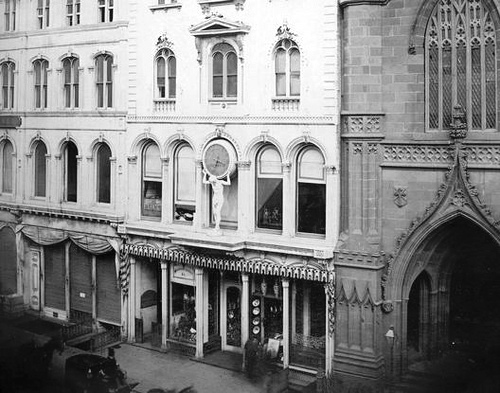
Tiffany's received international recognition when it won the grand prize for silver craftsmanship at the 1867 World’s Fair in Paris. And it was in the same year that Charles Tiffany purchased a significant portion of Hungary's celebrated Esterházy Jewels, which belonged to a prominent noble family. This purchase, along with the later acquisition of a third of the French crown jewels in 1887, was the making of the company. The press took note and dubbed Charles Lewis Tiffany "The King of Diamonds."

Tiffany & Co. became the go-to jeweller in the Gilded Age for the country’s first millionaires, the likes of the Astors, Vanderbilts, and Pulitzers. It wasn't just gemstones and jewellery these monied clients wanted, they asked for the latest silver cutlery, dinnerware, trinkets, sporting cups, and more. With clients like that, his reputation soared. The brand still makes trophies for top-class sporting events, such as the NFL's Vince Lombardi Super Bowl Trophy.

And Tiffany's reach extended to every pocket in America. In the 1880s, the Great Seal, used to authenticate all US government documents, was needing an update. Tiffany's head designer James Horton Whitehouse created a new design for President Chester A. Arthur, a design that features on the one-dollar bill to this day.

And you cannot think of Tiffany's without thinking blue. In the 1880s the company began selling jewellery in elegant turquoise cases, and the company's stand at the 1889 Paris World's Fair was covered in it.

It was a colour that became synonymous with the brand, but it took until 1998 for Tiffany & Co. to finally trademark it. A few years later, the brand partnered with Pantone to name the colour “1837 Blue,” commemorating the brand's founding year. Those signature, pale blue boxes, are so iconic AdWeek hailed them the World’s Most Popular Packaging Design.

Charles Lewis Tiffany died on 18th February 1902, at his home in Manhattan. He was ninety years old. His son, Louis Comfort Tiffany, stepped into the role of the company's first Design Director, and promptly forged his own path entirely. He became one of the foremost voices of the Art Nouveau movement in America, celebrated for his naturalistic motifs, sourcing the finest semi-precious stones, and exquisite hand-crafted enamelling. Most people though, know him for something else entirely, his stained glass windows and lampshades, which became icons of the age in their own right.

Many designers and collaborators shaped the brand's designs after Louis Comfort Tiffany's passing in 1933, such as Paloma Picasso, John Loring, Jean Schlumberger and Elsa Peretti, all of whom brought something unique to the brand's portfolio, and inspired designs that live on.

The company went public in 1987, the same year it bought back the Fifth Avenue flagship it had occupied since 1940. In 2021, after a protracted and rather dramatic negotiation, LVMH, the French luxury conglomerate behind Louis Vuitton, Dior, and Bulgari, acquired Tiffany & Co. for $15.8 billion, one of the largest luxury acquisitions in history. The new owners wasted little time. The flagship was closed for a four-year, $250 million transformation, and on 28th April 2023, The Landmark opened its doors.
The Tiffany & Co landmark design
The renovation and redesign of the iconic flagship was undertaken by OMA practice, and it features an addition of a couple of floors, wrapped in glass and metal panels, lit from within by the signature Tiffany blue.

One of the top interior designers in the world, multi award-winning, taste-maker, designer, art collector and architect Peter Marino took nearly 4 years to create the interiors alone.

Marino is an icon of design, and no shrinking violet. He is credited with redefining the world of luxury design and is as instantly recognisable as the logos of the brands he works for. He graduated from Cornell in 1971, setting up his New York practice in 1978. Andy Warhol was his first residential client and Barneys New York was his first retail store. He has mixed art, texture, materiality, scale and light with a deft, leather-clad, often bejewelled hand ever since. He is, quite simply, the premier rock star designer for luxury retail brands, such as Chanel, Bulgari, Vuitton, Armani, Fendi, Christian Dior, YSL, Hublot, and others. His portfolio is vast, eclectic and accomplished, spanning commercial and residential projects for the chosen few that can afford him.

Art is at the forefront of many of Marino's designs. His knowledge of the subject is extensive, his personal collection diverse and world-class and it is a true passion, though gardening might take the top spot. He commissions art for all his designs, be it hotels, residences, or stores, bringing in artists at the start of projects rather than after the fact. This could be why the store we enter feels more like a gallery than just a store. There are pieces by Damien Hirst, Julian Schnabel, Anish Kapoor, Hans Hartung and Daniel Arsham.
The renovation was aiming for some serious eco credentials too. It features 100% renewable electricity, LED lighting, rainwater harvesting, advanced air filtration, and sustainable material sourcing. Apparently even the staff meals are healthy. All of this to target LEED Gold (environmental design) and WELL Platinum (health and wellbeing) certifications.
Entrance and Ground Floor at Tiffany & Co Landmark
You can't miss the nine foot tall Atlas clock, installed above the store entrance. Commissioned way back in 1853, as Tiffany & Co. moved flagship locations, they transported the clock with them. Still the oldest public clock in the city, it stands resplendent above the doors of The Landmark today.

Through the revolving doors in the preserved limestone façade, we catch our first glimpse of what is in store. We were early, so got the space nearly to ourselves, but trust me, it does fill up during the day with tourists and shoppers alike.
The sales floor has gone from a mixture of browns and dark-toned stone, to gleaming white marble and parquet flooring, under the glow of a 22-foot “Diamond Skylight” art installation by Hugh Dutton. It's a vast improvement.


It is here that you’ll discover some pieces from Tiffany's most popular collections, in display cases flanked by 14 video screens, each 19 feet tall, representing windows onto a CGI New York skyline, across which a pair of Schlumberger birds occasionally fly, which keeps you looking, believe me.

Everything felt more personal, more intimate.

Resplendent in a display case on this ground floor, presented as if it were the Mona Lisa in the Louvre, is the 128.54-carat Tiffany Diamond. Unearthed in South Africa in 1877 and cut in Paris by Tiffany's chief gemologist into a gem of 82 facets, it has been worn publicly by just four women in its near 150-year history, gaining iconic status when worn by Audrey Hepburn in the publicity photographs for the film Breakfast at Tiffany’s in 1961.

Lady Gaga wore it at the Oscars in 2019, and Beyoncé for Tiffany's About Love campaign in 2021. The setting you see today was created for the Landmark reopening. Estimated value: $30 million. A little out of my budget.

7th Floor at Tiffany & Co Landmark
My top tip is to head to the top floor in the elevator and work down. Attack the shop as if you're at Disney, to avoid the crowds. This brings you out onto the 7th floor, which we know is not the top floor, but is the highest floor the general visitor can access. The VIPs get access to the floors above, lucky them.

What we found was a mix of comfortable seating and display cases, and it's home to Tiffany's 'High Jewelry', some of the brand's premier pieces featuring remarkable gemstones which you can drool over.

The floor is designed into rooms, to make it less cavernous, with plump sofas to sink into while you debate what gems to add to your collection.

My husband's wallet remained tightly shut. To be honest, everything here was a little fancy to wear for a trip to the local pub.

This is the spot where you get the best views of the staircase, crafted in cerused oak, based on Peretti’s iconic bone bracelet. You'll have to be patient though, and grab a quick photo when the social media influencers have moved out of the way. It can take a while, trust me, as those mirrors seem to be a magnet for selfie-takers.

The 7th floor also houses a Patek Philippe boutique, displaying high-end watches, and artifacts and information boards on the brand, that was probably our favourite part of the store and certainly the one that felt more like a museum exhibit.

Tiffany's long partnership with Patek Philippe is one worth pausing on. Patek Philippe had a slightly rocky start. Founded in Geneva in 1839 by a Polish watchmaker Antoine Norbert de Patek, the original partnership fell apart within a few years. A new French collaborator came on board, the keyless winding mechanism was invented, and by 1851 the company finally had its name, Patek Philippe. That same year, Queen Victoria acquired one of their ornate pendant watches at the Great Exhibition in London. Things were looking up.

But Antoni Patek was worried. The Revolutions of 1848, as I mentioned earlier, had shaken Europe to its foundations, and he could see that the old monarchical markets his firm depended on were no longer reliable. He needed to expand across the Atlantic, to the find more lucrative markets with their "new money". In New York, he found exactly what he was looking for. He walked into the Tiffany's store on Broadway, and left with an order for 129 watches. A formal agreement followed a few years later and Tiffany became Patek Philippe's first American retailer, a partnership that is now over 175 years old.

But it goes deeper than that. To this day, Tiffany is the only retailer in the world whose name appears on a Patek Philippe dial.

For watch collectors, that co-signing is a kind of holy grail. When a Nautilus or Aquanaut turns up at auction with a Tiffany-signed dial, the room takes notice. In 2021, one of just 170 Nautilus 5711s, made to mark the anniversary of the partnership, sold for $6.5 million, against a retail price of around $52,000. That's definitely above my budget.

This area of the store was a work in progress, and we found a few areas not yet finished. But we did meet a lovely Jewish sales advisor, who had worked for Tiffany's for many years. She was genuinely pleased that we had taken so much time to interact with the information displayed. Not many guests did that she said.
A copy of the book Patek Philippe: The Authorized Biography, was available for us to flick through. You can buy it online and it would make a terrific coffee table book for the luxury watch lover. I'd have one for my brand books collection, but at over £100 second hand, I might have to save up for a while.

This artwork of the brand's Geneva Salon reminded me of a Wes Anderson film.

I was so taken by the displays that I plan to visited the Patek Philippe Museum in Switzerland. Now that's advocacy for you, even if I can't afford one of their stunning timepieces.
6th floor at Tiffany & Co Landmark - Dinnerware and home goods
Need a Tiffany dog bowl, a Tiffany baby rattle, a Tiffany dinner service or some Tiffany cushions? Then head to the Home and Baby department.

Your four legged friend might just need the Tiffany blue dog collar with silver accents.


It is home to some fabulous art by Julian Schnabel

I do appreciate a bold, geometric pattern.

The Tiffany Toile designs are full of whimsy, a bit like Timorous Beasties Toile wallpaper back here in Scotland. You can pick out New York landmarks such as the Brooklyn Bridge, the Statue of Liberty, the Atlas clock and a Tiffany & Co. diamond.

This is also the floor for Tiffany’s restaurant, the Blue Box Café, by Michelin-starred chef Daniel Boulud. The brand's webpage for the Blue Box Café says walk-ins are accepted. However, we arrived early on the day it opened and were prepared to queue for our Breakfast at Tiffany's, as it was our special anniversary. Sadly we were told politely that the restaurant was booked up for the next few months! We couldn't even book prior to our visit, as, at the time, they were not taking bookings from the UK, which luckily has now been rectified. So, we are left with just some images online that show us what we could have experienced.

The café opened onto the rest of the retail floor, with a burly security guard standing watch. We expected it to be situated in its own space, maybe on its own floor. I did feel for the security guard, who seemed to spend most of his shift politely telling tourists that they couldn't have a table. It might have been easier to have fabulous doors that shut out the onlookers. We were so close, yet so far!

A member of staff did tell us that she does have a few tables set aside for some of her clients. She was diplomatic enough not to insult me, but we got the distinct impression that if you were spending $50k on a bangle or two, then maybe you might get a coveted seat.
5th floor at Tiffany & Co Landmark - Silver
Tiffany might be known for its diamonds, but for most of us it is best known for one hero product, the sterling silver Return To Tiffany heart jewellery, engraved with the phrase “Please Return to Tiffany & Co. New York.”

The emblem was launched as a key chain in 1966, and then part of a gold jewellery collection in 1980, before being brought out in sterling silver in 1997, featuring an engraved ‘925’; a hallmark later adopted across the US as the benchmark of silver quality and authenticity.
The ‘Return To Tiffany collection’ encapsulated the mood of the early 2000s, aspirational, obvious, and nonchalant. It was worn by the celebrities of the day like Paris Hilton, and in films such as Legally Blonde, and its popularity soared to cult status.
With a huge trend in all things Y2K, it seems Gen Z is now on board too, and in an attempt to capture a younger market, Tiffany even collaborated with streetwear brand Supreme, to produce a new collection that sold out quickly. The heart chain has even been spotted on the likes of singer Ariana Grande. I have a necklace from the 1990s which I gifted my daughter on her wedding day.

I wear only a few pieces of jewellery, all silver and all of which come with a memory attached. This has simplified my morning routine no end. I wear them all day, every day, so they need to be quality, hardwearing, and simple enough to go with any outfit.
This was my 30th anniversary, and the occasion warranted a little treat, one that would remind me of my trip to New York. What better than the iconic Return to New York toggle bracelet with a diamond, as, like they say in the L'Oreal adverts, I'm worth it.
I might not be a high roller in the jewellery stakes, but the in-store experience was attentive and personal. The sales assistant even followed us through the store to video me with my little blue bag in front of the Audrey Hepburn display. That's brand advocacy in action. We could have had the heart personalised with on-site engraving, but they required a few days for that due to demand, days we did not have. So we were encouraged to get this done in London, and to make a romantic weekend of it. We obliged a few months later. That sales assistant certainly earned her commission that day. (Sadly in the excitement I forgot her name, but she was from Turkey if anyone from the store reads this). They can even personalise the blue boxes with stamps, while you sit on a Tiffany Blue chair.

Proud of my new purchase, we wandered through the Audrey exhibit. There's music and film footage, a replica of Audrey Hepburn’s dress and her hand-annotated script from the film.


Givenchy made a replica of Hepburn’s black gown from the film, which sits in a frosted box that goes clear every few minutes. This area was mobbed, so was probably the most popular exhibit in the store.
4th floor at Tiffany & Co Landmark - Gold and diamonds
Welcome to yet another dazzling temple to sparkle, under a celestial chandelier inspired by the drawings by Jean Schlumberger. Another friendly staff member explained the piece to us.

Three break-out boutiques, for the designers such as Paloma Picasso and Elsa Peretti, are accessed from the central corridor. The Peretti area has casework and walls in cork and burlap, giving it a more organic feel, that is more in keeping with her signature, amorphic jewellery.

The Paloma Picasso area has recreations of Tiffany window displays.
Floor 3 at Tiffany & Co Landmark - Love & Engagement
Surrounded by ivory silk wall panels, designed to represent wedding dresses, it is on this floor that visitors can pick out their engagement rings, flanked by works by Anish Kapoor and Daniel Arsham.


It is from this floor that the staircase winds its way up to the seventh floor, guarded by the 12-foot tall Daniel Arsham bronze sculpture.

There are display cases of diamonds here and information that explains the cuts, carets and more.
Floor 2 - staff quarters and restaurant
Apparently the 150 sales associates get their own restaurant and break-out areas on Floor 2.
10th floor at Tiffany & Co Landmark
The tenth floor is a Penthouse, for the high-net-worth, VIP clients, where they can shop in private, in four salons, with their own private dining area that can cater for sixty.

8th and 9th floors at Tiffany & Co Landmark - Exhibition
Something we were never told about, or shown to, was the Landmark: Museum and exhibition spaces on the eighth and ninth floors, which are supposed to offer a rotation of exhibits and experiences. Apparently, it's free and I'm gutted that I missed it. However, we were in the elevator and it was marked as "By Invitation Only" and we were ushered onto the 7th floor by the elevator attendant.

This would undoubtedly create a destination for a longer dwell time, play up to the gallery aesthetic, showcase the brand heritage, and reinforce the connection to the arts that luxury brands are so keen to foster. I hope it houses artefacts relating to the original building, the history of the Tiffany brand, the design inspiration behind the iconic pieces and even the new interiors, displays on the crafts involved, where the materials are sourced from, and how the brand is facing up to its social responsibility and sustainability. The success of the Vision and Virtuosity exhibition in London in 2022 should signal that there is an appetite to learn more, and where better than at the very home of the brand in a city full of tourists. There is a level of added engagement that only a museum or exhibition can deliver. One day I hope to return, if I'm allowed in.
Is Tiffany & Co The Landmark worth visiting?
Tiffany’s The Landmark, is a striking departure from the brand’s previous retail space, more gallery than store, inviting all to marvel at its gleaming, jewel-box design. While some areas remain reserved for VIPs, the general openness is refreshing and surprisingly democratic for such an exclusive brand.
I appreciate the brand’s desire to maintain an air of exclusivity, so I’m not expecting a peek at the penthouse levels any time soon. Still, I believe Tiffany has a real opportunity here. I wondered if they'd ever considered a casual café or gift shop: a place where the everyday visitor could experience a touch of Breakfast at Tiffany’s, marking a special occasion, indulging a little, or simply soaking up the ambiance. On reflection, I understand the hesitance; maintaining the luxury aura is key. But the demand is certainly there, and even a small addition could delight customers, and help cover the polishing bill alone.
Inside, there’s a captivating glimpse of craftsmanship, through one-way glass, where you can see artisans at work. Though photography is off-limits, this behind-the-scenes access is a growing trend in “industrial tourism.” It's educational, engaging, and a powerful reminder of the human hands behind the sparkle.
The integration of art and museum-like displays also enriched the experience. There are plenty of Instagram-worthy moments, even if you have to wait for your time in the spotlight. And it is worth noting that every staff member we interacted with was courteous and professional. No one looked down their nose at me once.
The space feels generous and accessible, with wide walkways and thoughtful design. That said, I’d love to see more tactile or braille signage near the gemstones. Models showing the cutting and polishing process, accessible to all, including those with sight loss, that would enhance both education and inclusivity.
If the museum exhibits on floors 8 and 9 are truly by-appointment-only and VIP-exclusive, that feels like a missed opportunity. Deeper storytelling and open access could foster stronger brand connection, not just for high-spending clients, but for students, aspiring designers, or those saving up for their first luxury piece. A brand museum can correct misconceptions, highlight ethical initiatives, and offer a more inclusive experience, especially important for younger, values-driven audiences.
As for my visit, I was spoilt by my husband, left with a smile on my face, and proudly paraded my iconic blue bag past the Tiffany windows before tucking it discreetly into my backpack. My little luxury now jingles on my wrist, a daily reminder of a truly memorable experience.
A little light reading
If you want to know even more, then there is an official book on The Landmark, released in 2024 and available online.

Plan your visit to Tiffany & Co Landmark
Address
The Landmark, 727 Fifth Avenue, New York, NY, 10022
Website: Tiffany's The Landmark New York
Getting to Tiffany & Co Landmark
We were on a 3-week road trip travelling from New York City, taking in Connecticut, Boston, Rochester and the Finger Lakes wine region, Pittsburgh and Philadelphia with lots of stops planned along the route. We flew from Edinburgh, Scotland direct to JFK with Delta ( a route we'll be using again for sure) and picked up a hire car from Avis.
Once in NYC it is easy to find the Landmark on public transport or by cab.
How long was the visit?
You could easily spend an hour walking around the floors and taking in the jewels and products on show without buying anything. We spent closer to two and a half hours, and would have stayed longer if the museum floors were open or we could have sat down for a coffee.
How much are tickets?
No tickets are required and this was not part of any advertising.
Opening times
It's always worth checking with Tiffany's for their current opening times, as they can vary, but the store is currently open from Monday to Saturday from 10:00 AM – 8:00 PM and Sunday from 11:00 AM – 7:00 PM.
You only need to book an appointment if you don't want to wait in line for a sales assistant to help you with a purchase. I did not book an appointment and a sales assistant was available within a few minutes, so booking wasn't necessary.
Appointments are required for product services, including cleaning and repairs.
Where we stayed for our visit to Tiffany & Co Landmark
We stayed for four nights at the Hilton Garden Inn NYC Financial Center/Manhattan Downtown, right near the water and entrance to the Staten Island Ferry terminal. We booked, as usual, through Booking.com. We found the hotel ideally located for a river walk to escape the heat, close enough to transit via the Metro and yet far enough out of the heart of the city to be quieter at night for sleeping. It was definitely more relaxing than staying in places like Times Square as we have done before and we can recommend it.


What to see around Tiffany & Co Landmark
New York has such a vast amount of things to see and do, we couldn't possibly do it justice here. Those closest to Tiffany's worth a mention are as follows:

Walk just 2 blocks to the corner of 5th and W59th and you'll find yourself outside the famous Plaza Hotel and one of the entrances to Central Park. The park first opened to the public in 1859 and today 42 million people visit every year. Designed by Frederick Law Olmsted, perhaps the greatest American landscape architect of all time, he based his design on a park just 3 miles from my hometown in the UK, Birkenhead Park. Several years later, he would take a blank patch of land and create meadows, knolls, ponds and waterfalls, and wrote that Central Park “should resemble a charming bit of rural landscape.” It most certainly is a welcome asset in the heart of this bustling metropolis. (There are links to Olmsted and several of the visitor centres I have visited and he will feature in an exciting upcoming project that I am currently working on - watch this space).

Walk just 15 minutes and you can do another random thing we did during our recent trip, and ride the Roosevelt Island Tramway, which offers great views from the air and runs every 7-15 minutes from 59th Street and Second Avenue in Manhattan to Tramway Plaza on Roosevelt Island. Once there we had a little walk around, a drink and headed back on the Metro to our next destination. It's even included in the 7 day city travel pass.

A 17 minute walk from Tiffany The Landmark and you arrive at SUMMIT One Vanderbilt, which we really enjoyed.

You get great views and plenty of time to enjoy the art installations on the observation decks. Top Tip - head up later in the day and you might get to see the views in daylight and sunset. There's a bar, so we had drinks with a fabulous view. Now one of our favourite observation decks in NYC for sure.

MOMA (Museum of Modern Art) is just a 7 minute walk from Tiffany Landmark and home to six floors housing 200,000 different paintings, sculptures, photos, drawings, and many other types of art, so you’re bound to find at least one thing you’ll like.
And for those fashionistas, there are retail stores aplenty from the likes of Chanel and Dior around the corner on E57th, to Gucci next door on 5th, and Westwood on E55th and if you need some respite then why not head to St Patrick's Cathedral only a 7 minute walk away.
There's so much to do, you'll never do it in a weekend and we recommend resigning yourself to return again (and if you're lucky again and again) and just spend time soaking up the atmosphere maybe with a walk around the Village, catching the view from Brooklyn or Jersey City, or slowing down walking the High Line. The City that never sleeps will always surprise and delight you.
Further Reading
Retail fans, if you liked this article then check out our guide to Magasin Du Nord Museum, Yankee Candle Village or to John Lewis Heritage Centre. More shopping related visitor guides coming soon.
Please note - I'm real
I visit every brand visitor centre and experience myself. My feedback is real, based on a single visit, but informed by years of experience designing and exploring brand experiences all over the world.
I love writing my own reflections, diving into a brand's history, doing the research and looking at spaces through the eyes of a commercial interior designer. With over 30 years of working with customers, I also enjoy watching how guests interact with guides, displays and spaces. Everything I share is honest, personal and entirely human, not AI generated.
That authenticity is important to me, and if it's important to you and you want to work with me, or share your experiences or want to suggest others, then I am happy to be contacted via this website.
Photographs: ©Julie White unless noted otherwise
Disclaimer - The views and opinions expressed are solely my own. I paid for the tours in full and any comments reflect my personal experiences on that day. Please visit and garner your own thoughts and feel free to research the brand and the visitor centre in question.


Comments