


The Visitor Centre today is ... John Lewis Heritage Centre
Updated: Aug 12
Working in Partnership - We learn more about John Lewis's revolutionary business model at this British retail giant's heritage centre.

I have always had a soft spot for the familiar comfort of a great department store. On a rather dreary March day, I found myself seeking refuge and inspiration at the John Lewis Heritage Centre in Cookham, Berkshire, the lovingly curated archive of one of the UK’s most beloved, staff-owned retail giants.
My relationship with John Lewis is woven into the fabric of my life. I still remember my mother buying my school uniform at George Henry Lee in Liverpool, often regarded as the "Harrods of the North".

In the 90s I'd hunt for power-dressing tailoring at Tyrrell & Green's in Southampton. Today you'll find me browsing the homewares in Edinburgh or Glasgow, before inevitably getting distracted by the nostalgia hit of the Topshop revival rails.

A trip to John Lewis always felt like a treat, reliable, reassuring, and never disappointing. You knew where you stood with them: quality products, honest pricing, staff who actually wanted to help. While much of the high street was dominated by faceless tycoons, John Lewis stood apart.
Today, John Lewis operates over thirty department stores, as well as John Lewis at Home stores, hundreds of Waitrose supermarkets, and a range of other businesses including broadband and financial services. From a single draper's shop on Oxford Street, it has grown into one of the UK's most trusted retailers, known for generous staff bonuses and Christmas adverts that have made grown adults weep into their mince pies. But in these changing times, for how long?
Once the beating heart of British retail, department stores were more than shops; they were retail theatres. From striking window displays to marble-floored food halls, they made shopping an experience, somewhere you went to be inspired, to touch things, to try things on, to feel like you were part of something.
But the grand era of department stores is fading. In recent years, the UK has lost some of its most iconic names. It's sad to walk past empty stores where once stood the likes of Debenhams, Beales, or House of Fraser. The reasons for their decline are many and familiar: online shopping redefined convenience, economic pressures deepened the cracks, and the pandemic finished off what was already struggling. But, too many of the big players forgot what we went there for in the first place, a compelling, memorable, in-store experience. We got bored of cookie cutter stores, where every high street was the same.
Yet, amidst closures, stories of reinvention emerge. Savvy retailers are evolving, investing in e-commerce, reimagining physical spaces and doubling down on experience, a sense of place, heritage and hospitality. Experiential retail is a growing trend, creating memorable moments through events, interactive displays, pop-ups, thoughtful design and social media opportunities. Retailers who embrace this can build loyal, engaged customers.
As one chapter closes, another may be beginning. The legacy of Britain’s great department stores deserves more than nostalgia; it calls for celebration, reflection and imagination. The question is not just what comes next, but who will rise to meet the challenge.
Which leads me to wonder: why do so few department stores have public archives or museums? Such spaces could enrich the customer experience with events, product launches and more. I often visit the Magasin du Nord museum in Copenhagen and question why giants like Harrods, Selfridges and Bloomingdale’s don’t have museum like visitor experiences to build deeper engagement? Maybe I can help change that? And perhaps John Lewis will use this hidden resource to even greater effect.
Visiting the John Lewis Heritage Center: What to Expect
The John Lewis brand history
Picture London in the late 1700s. Let me help you. It's a city of small, specialist shops, drapers, tailors, milliners, shoemakers, haberdashers, furriers, silk merchants and more, each one a master of their particular trade. By the time Queen Victoria came to the throne in 1837, the most ambitious merchants had begun to expand, buying up neighbouring premises and folding different trades under one roof. The goods were sold in different departments within these new, larger stores, and the term department store was born. London's great stores became household names, fuelled by their proximity to the theatre district, royal connections, and excellent transport links. You might know some of them - Fortnum & Mason, Harvey Nichols, Dickins & Jones.

John Lewis was born in Somerset in 1836 and orphaned before he was eight. From his early teens, he had apprenticed for drapers, sleeping under shop counters and learning his trade. Aged twenty, he arrived in London, five years after The Great Exhibition was held at Crystal Palace, to a city alive with trade and a rising middle class. He found work as an apprentice to London's top silk merchant, learning the tactile secrets of fine fabrics. The British textile industry was, at that time, the powerhouse of the Industrial Revolution, and, as someone who spends half her life running her hands over textiles, I appreciate the nuances of weight, drape and texture, let alone the craft of production.
In 1864, John took a leap of faith and opened his own drapery and haberdashery at 132 Oxford Street, a four storey Georgian property. The store expanded into neighbouring properties, emerging as a fully-fledged department store in 1885, and it is still operating on the same site today. The store became synonymous with service and value. But for its workers, things were not so positive. Hours were long, conditions poor, and pay low, typical of many Victorian businesses of the day, and Lewis was regarded as an autocratic employer.

John's sons, John Spedan Lewis and Oswald Lewis, joined the company in 1906. Both were given £50,000 and a quarter share of the business. But they had very different views on management and equality. Spedan worked out that the combined annual salaries of John, Oswald, and himself were equal to the combined wages of every one of the 300 staff working for them. He thought this deeply unfair. His father did not. He raised his concerns, but John was entirely unrepentant.
John Lewis, rather than concerning himself with workers' rights, had his eye on expansion. He walked to the Sloane Square location of ailing competitor Peter Jones with twenty £1,000 notes in his pocket, and bought the store there and then. Cash on the table. Done. He had little interest in the new venture, however, reluctantly putting Spedan in part-time charge. The two never saw eye to eye.

A riding accident in 1909, that nearly killed him, gave Spedan an enforced pause, and, as it turned out, the time to think. Interestingly, it was the same year that Harry Gordon Selfridge opened his spectacular new store just down the road on Oxford Street, all fanfare and theatre. While London was marvelling at Selfridges' famous window displays, Spedan was lying in convalescence quietly asking a rather different question: why couldn't the John Lewis stores share the profits more equally, for the benefit of all employees? It was the seeds of an experiment in industrial democracy. In 1916, following an explosive disagreement with his father, he left the Oxford Street store to run Peter Jones full-time.
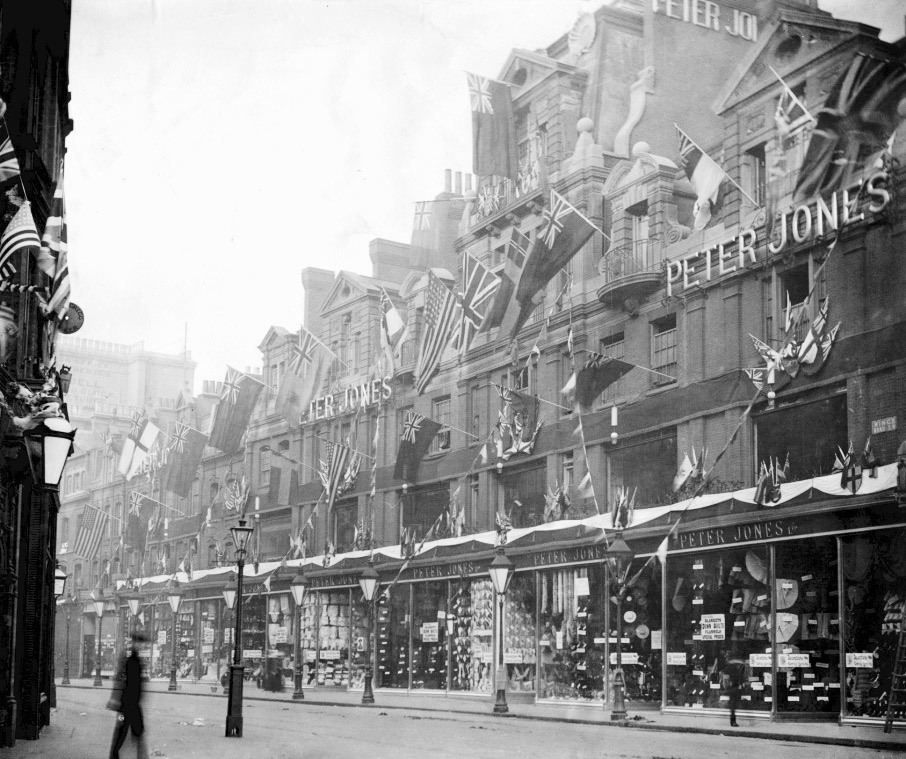
Their contrasting management styles came to a head on 27 April 1920, when four hundred John Lewis staff opted for strike action, timed to coincide with a major John Lewis sale, an event caught on Pathé news. They were demanding trade union representation, better pay, and decent working conditions. John fired them all on the spot. The public, other traders, and even Royalty raised money for the protestors, but it was to no avail. John's decision was final. His sons, especially Spedan, had had enough. And frankly, who could blame them..
Spedan wanted to demonstrate a dramatic change in business relations and hatched a plan to make Peter Jones a Limited Liability Company, in which all employees, or "Partners", as he called them, would be shareholders, receiving a portion of the profits proportionate to their pay. His father wasn't best pleased.
But Spedan wasn't finished. He improved working conditions, set up staff committees where everyone had a voice, extended holidays, and reduced the working day, all to boost morale and productivity. He encouraged staff to take up sport and launched a staff magazine. And in 1925, he introduced the now-legendary 'Never knowingly undersold' pledge, committing the store to refund customers the difference if they found the same item cheaper elsewhere. It remained a brand promise until 2022, nearly a century later (reintroduced in 2024).
On his father's death in 1928, aged 92, Spedan took over control of both stores and signed the First Trust Settlement, transferring shares to a board of trustees on behalf of the Partners. The John Lewis Partnership Ltd was formed, and it began distributing profits among its employees in 1929. The company went from strength to strength, acquiring Waitrose in 1937.
In 1950, Spedan signed the Second Trust Settlement, transferring all his remaining shares and control to the trustees. He resigned as chair in 1955, known within the company ever after as "The Founder".

John Spedan Lewis died, aged 77, in February 1963 at his home in Hampshire. A naturalist as much as he was a businessman The John Spedan Lewis Foundation (JSLF) was established in his memory in 1964, continues to support natural history and wildlife conservation to this day. A man who gave away his fortune to his workforce and spent his retirement watching birds and gardening. I rather like him.
"If a naturalist who was a bit of a gardener, found a seed washed up by the sea, he might plant it and tend to it to see if it was alive, and to see what it could come to if it was alive. The John Lewis Partnership as been an experiment of that sort. Not with a seed but with an idea, for a better way of managing business. So that instead of the many being exploited by the few, there would be genuine Partnership for all." (John Spedan Lewis)
Today the company employs approximately 80,000 Partners. Like many, John Lewis faced tough times during the pandemic, closing eight stores permanently in 2020. But resilience is at the heart of this retailer. The Oxford Street store remains the brand’s flagship store, refurbished in 2007 at a cost of £60 million, with a further £6.5 million refresh in 2024.
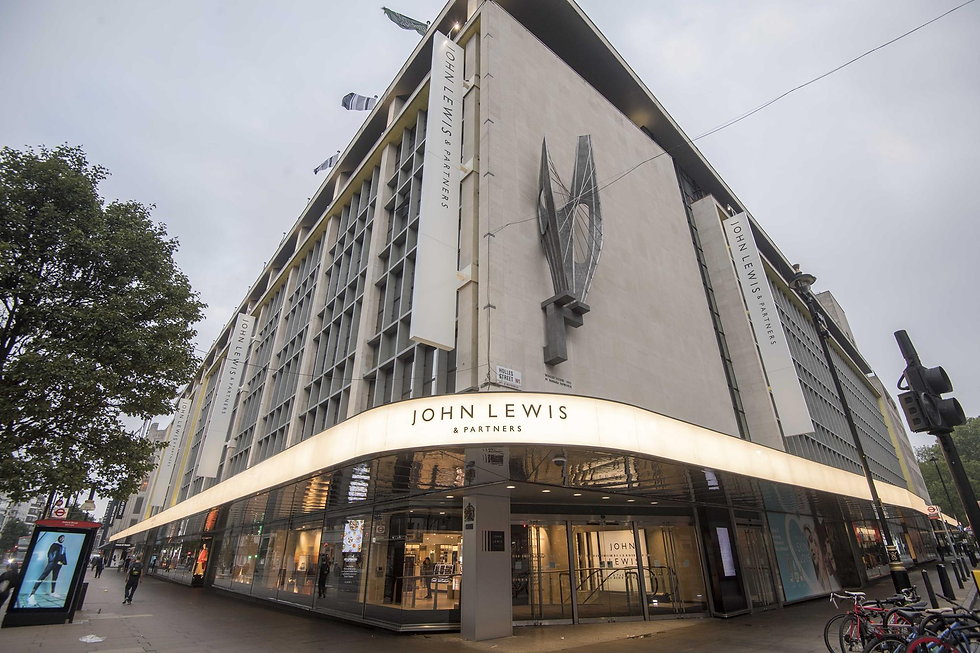
By 2023, the brand was three years into a significant transformation strategy, reaffirming its commitment to the employee-owned model and its ethical and sustainable practices. In 2022, John Lewis had made the tough call to end its famous "never knowingly undersold" pledge, explaining it had lost relevance in an age of online-only retailers. But in 2024, the pledge came back, this time covering the big online players too, a 100 year old promise celebrated in 2025 with an advert by Saatchi and Saatchi. A smart move, and one that has clearly restored confidence.

2024 brought a genuine turnaround: group sales rose 3% to £12.8bn in the twelve months to January 2025, with underlying profit climbing from £42m to £126m. The brand has invested in British farmers, launched initiatives to provide jobs for young people from the care system, and is developing children's play areas in some stores. It feels like a business that has remembered what it stands for.

I will visit the flagship Oxford Street store next time I'm in London. They've hired a Visitor Experience Director, employed a concierge, are sending their employees to theatre school, and have installed a pub, a rooftop garden, and a Jamie Oliver Cookery School and Café. I mean, honestly. That's my kind of department store.
Although no brand is perfect, I wish them well. The high street would not be the same without them.
The John Lewis Heritage Centre design

Opened in 2013, the John Lewis Heritage Centre is housed at the Odney Club in Cookham, Berkshire, a private members club sitting right on the banks of the River Thames, complete with a manor house, hotel, restaurant, and therapy suite. It is one of the more enviable employee benefits in British retail, and it is still very much in use.

Lucky them. Over the years, the Partnership has acquired several residential clubs like this one, where Partners could enjoy sports and social activities, take a holiday, or even rent rooms to live in. The kind of perk that many of us only dream of.
FSP Architects & Planners, working with construction company Conamar, transformed a pair of part-derelict barns, most recently used by the brand's Odney Pottery during World War II, into the new £1.5m heritage centre. The timing was fortuitous: the company archive, carefully curated since the mid-1960s, had been sitting in a warehouse in Stevenage, and with that warehouse closing, the collection needed a proper home. It has found a very good one.

The 590 sq m heritage centre was opened on the 100th anniversary of the formation of the John Lewis Partnership, and the 150th anniversary of the first John Lewis shop in Oxford Street, London. The design won the Best Small Commercial Building and Best Change of Use of an Existing Building or Conversion categories at the Central LABC Building Excellence Awards in 2014.
The centre’s aim is 'protecting the past, inspiring the future.'
John Lewis Heritage Centre - Entrance
As an interior designer, I did a quiet double-take at the building's exterior. The architects made a wonderfully considered choice: they went into the archive and pulled out a Charles Voysey textile pattern from around 1887, using it as the direct inspiration for the external timber cladding. It is the kind of detail that makes you smile, a building literally wearing its own history.

Voysey was a key figure in the Arts and Crafts movement, influenced by both William Morris and John Ruskin, and his work has a distinctive quality: intricate, natural, and quietly confident. But the choice wasn't just aesthetic. Voysey had a personal connection to the John Lewis story. He was friends with the designer of the original Peter Jones store in London. That link made his pattern the perfect choice for the façade. It was so tactile, I found myself running my hands over the carving.

The Cummersale Archive
The Cummersdale Design Collection takes its name from a small village outside Carlisle, where Stead McAlpin, one of the world's great fabric printing works, had been operating since 1835. The John Lewis Partnership owned the factory for over seventy years, from 1934 until 2007, and when it was eventually sold, the extraordinary archive of designs it had accumulated over nearly two centuries came to Cookham.

Over 25,000 designs, some dating back to the 1800s, now live here, including work by Charles Voysey and William Morris. As a designer, I could have spent the entire day in there. Visitors cannot take photographs inside the archive, so I only have a quick snap from the doorway.

Working at two tables within the archive space, were two volunteers, both former employees/Partners. Both told me tales from their working life, showed me some of their favourite designs and reminisced with me on my family memories of John Lewis stores I have visited since I was a child.
Did you know that there is fabric in here from the Titanic? A single bolt of chintz fabric, used in the State Rooms, is hidden amongst the collection. Designed and crafted over two years, exclusively for the ill fated vessel, it was printed at Cummersdale.

Other galleries at the John Lewis Heritage Centre
The museum galleries are compact but well focused. The first small display features props from the iconic John Lewis Christmas TV advertisement campaigns. The first John Lewis Christmas advert 'Shadows', aired back in 2007 and since then the annual advert has been eagerly anticipated. For some, it is seen as the start of the festive period. Though these adverts originally were purely designed to promote products as potential Christmas gifts, they evolved into heartwarming short films, that have increasingly come with a deeper message, often linked with charity campaigns. Everyone has their favourites and mine were The Journey (2012) and The Long Wait (2011). Truly, hankies at the ready stuff.


Next are some displays on the subsidised social and sporting clubs that Spedan Lewis insisted should be made available for all partners. This included giving tickets for the opera and providing sports facilities for fishing, sailing, clay pigeon shooting and more.


The Odney Club, on whose grounds the Heritage Centre sits, was just one of several private clubs that the brand created for its partners/staff. Another, the Bala Lake Hotel, Spa and Activity Centre, is close to where I would camp with guides when I was a child, and is just up the road from one of my favourite places in the world, Portmeirion village. A designer's dream.

The next section invites Partners and members of the public alike to sit down and share their memories of the brand through the "Partnership Stories" oral history campaign. There's a comfy chair, a branded cushion, and a member of staff on hand to record whatever you'd like to share, for posterity, and for the archive.

I've worked on oral history projects with clients across a range of sectors, and they never fail to surprise. The stories that emerge, the ones no press release would ever tell you, are often the most revealing: the small moments, the characters, the things that went quietly wrong or unexpectedly right. This kind of resource has real value beyond nostalgia too. It feeds into reminiscence therapy, academic research, brand storytelling, and design inspiration. I hope John Lewis makes the most of it.

Next visitors can see the original Constitution from 1929 sitting alongside the current one. The Constitution forms the rules by which the Partnership is governed.
You can see an example of one of the employees share promise certificates. This is from the time when Spedan was running Peter Jones, but could not persuade his father to share the business profits with the employees. These promise certificates, signed by Spedan himself, were replaced by shares in 1929 when he finally created the Partnership.

There's a ballot box used in what was my nearest store when I was growing up, G H Lee in Liverpool. There are several pictures of stores throughout the ages, including one of Tyrrell and Green's in Southampton, that I used to shop in.

And I for one know that I need a guide to being more beautiful.

Something else that caught my eye, was a box of duplicate recipe cards from in-store food campaigns, made available from the archive to visitors to take away. It's such a small thing, but as someone who thinks about visitor experience for a living, I notice these details. A free takeaway that connects you to the brand, it costs almost nothing to produce.


On show is a kiln that was taken out of the pottery buildings that were renovated into the Heritage Centre. Spedan Lewis planned to set up a craft college in Cookham and was given the details of a Welsh craft potter and his wife, who had been retraining unemployed miners to become potters. John Bew moved with his wife to Grove Farm and set up the Odney Pottery, recruiting ex-servicemen living with post-traumatic stress after the Second World War. His creations have been exhibited at national festivals and owned by the Royal family. After his tragic death, the doors to the pottery were locked and remained so until the work on the visitor centre started in 2012. You can find out more about this fascinating story on the John Lewis Memory page.
Time for some nostalgia. There are several historic artefacts on show from way before my daughter was born, that she had fun looking at. There were things like sewing machines, dress patterns, a Goblin Teasmade like my grandmother had at the side of her bed, and even an Apple Macbook from the 1990s.
Fun fact - John Lewis was the first retailer in the UK to stock Apple products.
There's a till from a Waitrose shop dating from before the 1970s. That's even before my time.
The Waitrose story
What neither of us realised, is that the grocery side of the Partnership, Waitrose, gets its name from Wallace Wyndham Waite, Arthur Rose and David Taylor, who opened their first shop in London in 1904. Following the departure of Mr Taylor, Waite and Rose formed Waitrose Ltd in 1908.

There is a small display of items that have been stocked at Waitrose over the years. Font fanatics such as myself will be very happy, as there are plenty of interesting typefaces on show. The large sign was uncovered in Pimlico, London, following the renovation of the storefront of a bookmaker’s shop. Underneath was another even earlier sign and both are now in the brand's archive.

If you're into fonts and typefaces, and I very much am, the vintage branded items on display are a quiet delight. There's something fascinating about watching a brand's visual identity evolve over a century: the shift from ornate Victorian lettering to clean mid-century sans-serifs tells you almost as much about the times as it does about the company.


My daughter's most memorable exhibit though was a shopping cart/trolley from an early Waitrose store.

It was small and very narrow, almost like a children's trolley now, designed to fit down the equally narrow aisles of the old stores, and to hold, what was then, a weekly shop. Shopping habits have indeed changed!
The brand has an online Memory Store that has much more information on its history that is well worth a look.
John Lewis Heritage Centre - Spedan's Office

There's a small area dedicated to the life of Spedan Lewis. It is based in part of the original farm building and includes the original fireplace. There is a short film on the brand's history and some personal items such as Spedan's microscope and a chess set. Not content with running a large retail empire, Spedan was a keen naturalist and avid chess player. He believed that chess improved planning skills and often interviewed candidates whilst getting them to play a game with him, to see if they were the right calibre of employee. He set up the National Chess Centre in 1939 in his Oxford Street store, but both the club and store were destroyed in the blitz during the World War II.
What connection does chess and John Lewis have with the famous codebreakers at Bletchley Park?
Charismatic Cambridge graduate and chess champion, Hugh O'Donel Alexander CMG CBE (19 April 1909 – 15 February 1974), was employed as John Lewis Partnership's Director of Research in 1938. In 1940 he was recruited, due to the outbreak of the Second World War, to lead a team of codebreakers in Hut 8, including Alan Turing, who were ultimately successful in breaking the German Enigma code.

After the War, he left John Lewis and worked at the British intelligence and security organisation GCHQ for 25 years. He was also twice British chess champion and was given the title of International Master. If you haven't visited Bletchley Park, I can highly recommend it. I visited for six hours and still had more to learn. And if you cannot make a trip there, then why not watch the terrific movie, The Imitation Game (2014), where he is portrayed by actor Matthew Goode.
If you want to learn more
I stumbled across a fabulous book about the brand's history in a second-hand bookshop, A Very British Revolution by Jonathan Glancey, and it was an absolute treasure trove of design history and visual inspiration, invaluable for putting this guide together. If you want to go deeper into the John Lewis story before or after your visit, start there. Read more books, folks. There is something about turning the pages, delving into nostalgia when you find an image you weren't expecting that no search engine or AI can replicate.

Is a visit to the John Lewis Heritage Centre worth it?
The John Lewis Heritage Centre is small, but it punches above its weight. It's the kind of place that rewards the curious, whether you're a design obsessive, a retail history enthusiast, a font nerd, or simply someone who grew up with a John Lewis carrier bag as a symbol of a treat.
The archive and oral history resource, combined with the online Memory Store, create real opportunities for designers, historians, and educators. It is also, quietly, a wonderful resource for reminiscence therapy. There is something powerful about sitting in a room full of objects that map the shape of ordinary British life across a century.
Given how few department store archives exist anywhere in the world, this one feels quietly important. It is preserving something that could so easily have been lost, and doing it with care.
I wouldn't make a special journey of hundreds of miles for it alone, but if you're in the area, go. And if the Bletchley Park connection hasn't already sold you on the trip, I'm not sure what will.
Plan your visit to the John Lewis Heritage Centre
Address
3 Church Gate, Sutton Rd, Cookham, Maidenhead SL6 9SP
Website: John Lewis Heritage Centre
How long was the visit?
I was there for an hour and I had seen everything, taking photos of artifacts and talking to the volunteers in the archive.
How much are tickets?
It was free and this was not part of any advertising.
Tour options at the John Lewis Heritage Centre
This is a self-guided experience though you can book in to see the archive.
If you want to see more of the Odney Club, then visitors that are not Partners, can visit the gardens, as they are open one day a year as part of the National Garden Scheme.
Opening times
It's always worth checking with the venue for their current opening times, as they can vary, but the Heritage Centre is usually only open on Saturdays from 10am until 4pm.
Where we stayed for our trip to the John Lewis Heritage Centre
We wanted some cost-effective and convenient accommodation for the night before we visited the Heritage Centre and looked for a suitably pretty town with some good places to eat. Marlow is on the River Thames, alongside the woodlands of the Chiltern Hills. It has an abundance of boutique shops, restaurants, cafes and bistros. You could dine at celebrity chef Tom Kerridge's The Hand & Flowers, the first gastropub to hold two Michelin stars, located on West Street, though it is quite pricey. There's enough to do for a wander around for an hour or so.

We stayed in a twin room (though we got 3 beds) at the Travelodge, Marlow which is a little away from the centre of town in an industrial estate, next door to a paid car park (£3 for 24 hours) and a fabulous and extremely popular coffee roaster, Coopers Trading Company. We stopped by for brunch before heading to the Heritage Centre and can highly recommend it, even if, like us, you have to queue. The hotel was cheap and cheerful and good enough for one night only but we won't rush back. But we have told friends about the coffee roasters.

I can recommend the Shakshuka, as it was delicious with two eggs baked in Ras El Hanout spiced tomato & pepper sauce, served with toast with added chorizo.

Getting to the John Lewis Heritage Centre
We were on a 3 day long weekend trip from Scotland, flying in from Edinburgh to London Luton airport with EasyJet. Luton Airport is only 38 miles from the Heritage Centre.
From where we stayed in Marlow, the Heritage Centre was a short 13 minute drive. It is close to the M4 and M40 so you can arrive by car easily.
What to see near to the John Lewis Heritage Centre
If you're into your food and in the area, why not try booking a table (well in advance) at the Fat Duck by experimental, superstar chef Heston Blumenthal in Bray, 9 miles from Marlow. It will be simply unique.

Cliveden Gardens, run by the National Trust, is only 7.5 miles from Marlow. A palatial 17th Century country house which is now a five AA Red Star award-winning hotel, it is surrounded by 376 acres of Grade I listed formal gardens and woodland.

I have been known to while away a few hours and bag a bargain at Bicester Village outlet mall. With more than 120 boutiques, including Coach, Dior, Ralph Lauren, Mulberry and Barbour, all at discounted prices, plus a few restaurants and cafes, free parking and a dedicated mainline train station, it's a shopper's delight and is always busy with tourists from near and far. It's 40 minutes by car from the John Lewis Heritage Centre and extremely easy to get to.

Just over ten miles from the Heritage Centre is Windsor and Windsor Castle. A residence of the British Royal Family and venue for Prince Harry and Meghan Markle’s wedding, visitors can tour the castle built by William The Conqueror in the 11th century, making it the oldest and largest inhabited castle in the world.
Across the river from Windsor is Eton and the famous Eton College, the private boys’ school where a host of British politicians and actors such as Eddie Redmayne, Tom Hiddleston, Boris Johnson and David Cameron were educated. Eton has a historic high street and you can visit the College’s three fascinating museums.
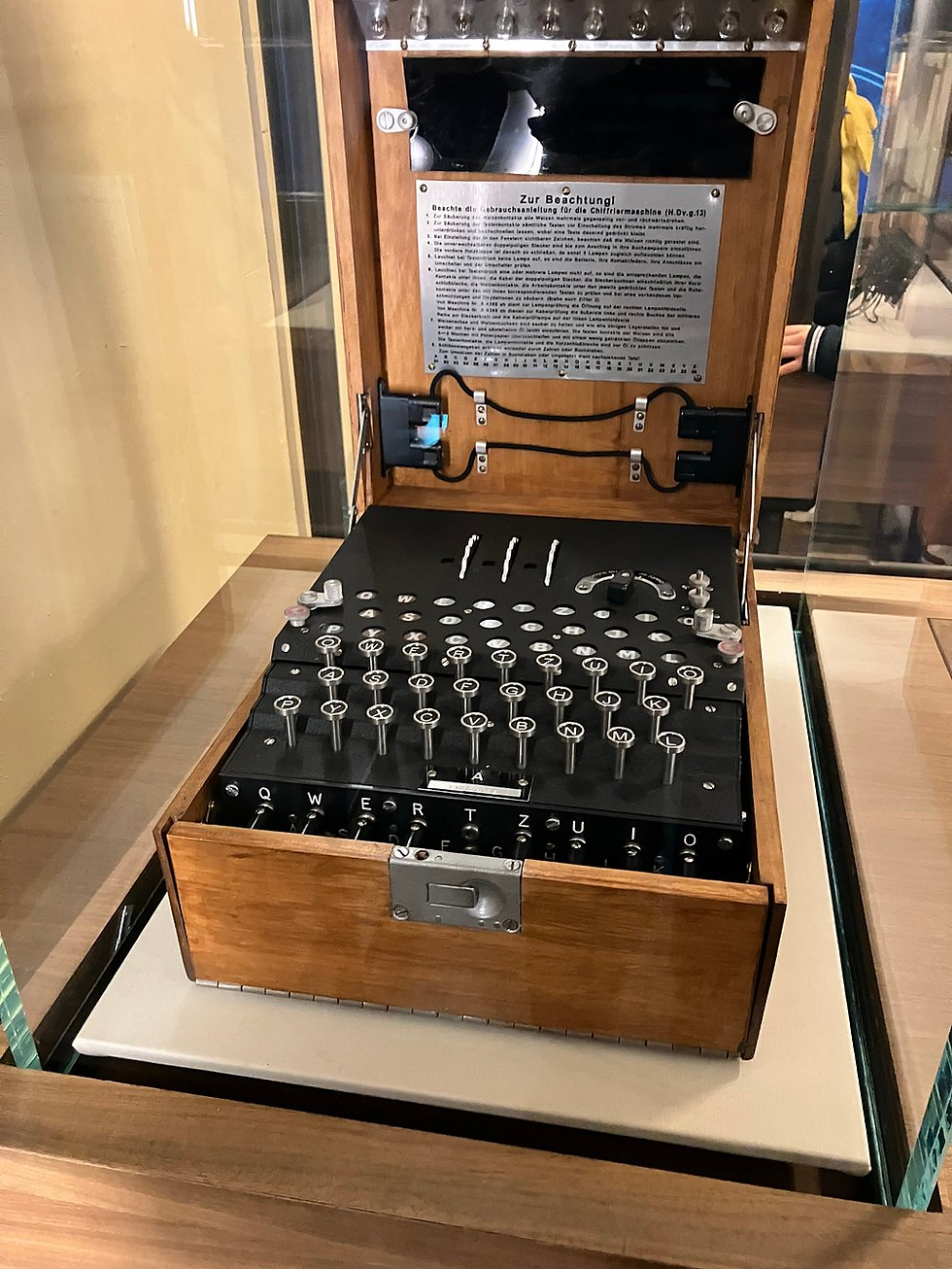
The aforementioned Bletchley Park is just over an hour north from the John Lewis Heritage Centre by car. Clear a full day if you can. I gave it six hours and left wishing I had more. One of the most extraordinary places in Britain, full stop.
Further reading
Retail fans, if you liked this article then check out our guide to Pendleton Woolen Mills, Magasin Du Nord Museum, Yankee Candle Village or to Tiffany's Landmark. More shopping related visitor guides coming soon.
Please note - I'm real
I visit every brand visitor centre and experience myself. My feedback is real, based on a single visit, but informed by years of experience designing and exploring brand experiences all over the world.
I love writing my own reflections, diving into a brand's history, doing the research and looking at spaces through the eyes of a commercial interior designer. With over 30 years of working with customers, I also enjoy watching how guests interact with guides, displays and spaces. Everything I share is honest, personal and entirely human, not AI generated.
That authenticity is important to me, and if it's important to you and you want to work with me, or share your experiences or want to suggest others, then I am happy to be contacted via this website.
Photographs: ©Julie White unless noted otherwise
Disclaimer - The views and opinions expressed are solely my own. I paid for the tours in full and any comments reflect my personal experiences on that day. Please visit and garner your own thoughts and feel free to research the brand and the visitor centre in question. Please drink responsibly.

Comments