


The Visitor Centre today is ... Royal Mint Experience
Updated: Aug 12
Discover how Britain's coins are made at the Royal Mint Experience in South Wales, home to the UK's oldest company.

Who makes the coins in your pocket? Depending on where you live, it is usually a mint. In the UK, it is The Royal Mint, considered one of the most respected and trusted mints in the world.
But maybe, like me, you don't have any coins in your pocket at all any more. I grew up in a world where "pocket money" meant exactly that - a few coins at the bottom of a coat, saved for an emergency or a special treat. There was a ceremony to it.
We can all be a bit nostalgic for those times when the tooth fairy left cash under our pillow, or you needed ten pence for the phone box to call home, or you had a jar that you added change to, saving up for the must-have toy of the day.

Cash had a personality. It got dirty. It got lost down the back of the sofa. It carried the history of every hand it had passed through. Long before Instagram or even the printing press, coins were the only way a ruler could broadcast their image to the masses. If you lived in a far-flung corner of the Roman Empire, you'd never see the Emperor in person, but you'd see his face every time you bought a loaf of bread. They were propaganda in your pocket, used to announce victories, celebrate new heirs, or simply remind everyone who was in charge. And coins are hardy things, surviving long after paper notes, found in the ground long after we've been and gone. A treasure waiting to be found by future archaeologists or those who spend their weekends scanning the ridges and furrows of the countryside looking for that electric "beep," in the hope of finding a single, battered piece of history.
But in many countries, it's all changed. The move towards a cashless society has been underway for over 15 years, accelerated sharply by the pandemic. Analysis from Barclays Investment Bank predicts that cash usage will decline to just 20% of all transactions by 2030 in the UK.
Yet cash still matters enormously - to the elderly, to those on low incomes, to anyone without a bank account. In the UK alone, fifteen million people rely on it every day just to manage their money.
Visiting a mint
Taking a trip to a mint might seem an odd thing to do. With no plans to reenact a heist movie, reverse a truck up to it and don a balaclava and rob the place, you might wonder why anyone would bother. If you're a numismatist or coin collector, then maybe. But why would anyone else go? Trust me, there's much more to them than you think.
There are over 70 government-owned mints globally, as well as 40 privately-owned mints, producing almost 800 different coin denominations.
The world's oldest continuously running mint is the Monnaie de Paris in France, which was founded in AD 864 and is the world's eighth-oldest company. It combines historical collections with active metalworking craft workshops.

Due to the Spanish crime-thriller series Money Heist (La casa de papel) on Netflix, Casa de la Moneda Museum, the Royal Mint of Spain in Madrid, has visitors flocking in and it offers a multimedia museum and even concerts.
When I ended up in Philadelphia I made sure to visit the US Mint, and watched coin production and saw the glass mosaics created by Tiffany & Co from 1901.
The coins in your pocket carry a guarantee of quality that most of us never think about, until you see how they are made.

The Royal Mint Experience in South Wales takes you behind the scenes at the world's leading export mint. With over 1,000 years of coin-making history to get through, you will want to give it time.
Visiting the Royal Mint Experience: What to Expect
The Royal Mint history
The Royal Mint has been making Britain's coins for over 1,100 years - which makes it, by some measures, the oldest company in the country.
In 886 AD the London Mint became a single institution. Its first coin was a silver penny of Alfred the Great, king since 878 AD, who had forced the pesky Danes (Vikings) out of London. In 1279 the Mint was moved to the Tower of London. During its time there, the Royal Mint produced some of the most famous coins in history, including the gold sovereign, first struck in 1489 during the reign of Henry VII.

Then, in 1696, Sir Isaac Newton took up the post of Warden of the Mint, responsible for investigating cases of counterfeiting. Newton took the role rather more seriously than anyone expected. He went undercover in London's taverns and prisons in disguise, personally gathering evidence against counterfeiting rings. It was high treason, punishable by death, and Newton sent at least 28 people to the gallows. Not what you'd expect from the man who discovered gravity.

During its time at the Tower of London, the Royal Mint produced some of the most famous coins in history, including the gold sovereign, first struck in 1489 during the reign of Henry VII.
In the 19th century, the Royal Mint moved to new premises on Tower Hill in London but was running out of space by the 20th century.

After over twenty sites were considered, in 1967, the Mint moved to its current location in Llantrisant, South Wales, into two newly constructed large concrete-clad buildings. One building was for the treatment of blanks and the other for the striking of those blanks. It was opened by the late Queen Elizabeth II in December 1968.

The UK entered a deep recession in the early 1970s, causing the Mint to suffer from low profits. To combat this, it was established as a trading fund on 1 April 1975 and had to become self-sufficient. This measure worked well for a while, and the Mint became more profitable through heavy exports. In 2008, following the global financial crisis, rather than being sold off entirely, the Mint was restructured as a limited company, still ultimately owned by HM Treasury, and set about making itself profitable through exports and the growing trade in commemorative coins and medals.

For many years, the Royal Mint was the world's largest export mint, producing coins for more than 100 countries. That chapter has now closed. In 2024, the Mint decided to exit the overseas currency market entirely, refocusing on UK coinage, commemorative coins, and new ventures closer to home. The Mint produces medals for collectors and made all 4,700 Victory Medals for the London 2012 Olympic and Paralympic Games. More recently, it produced an official Team GB and ParalympicsGB 50p for the Paris 2024 Games, tucked into every athlete's kit bag as a good luck token. A coin in your pocket, after all.
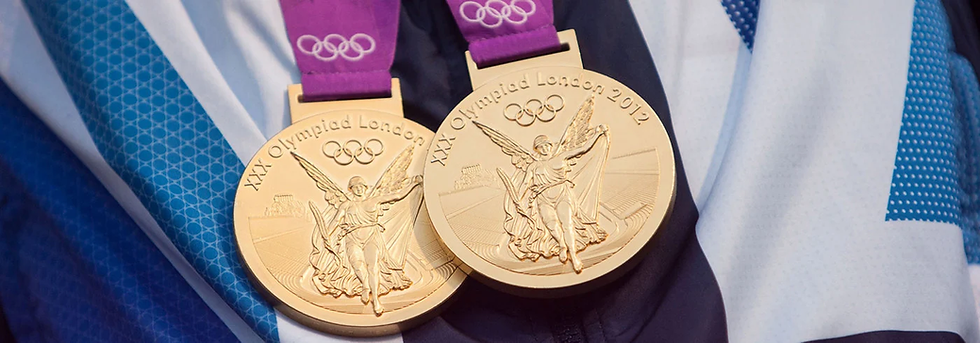
The most profitable part of the business is now the commemorative coin, the one you keep in a box rather than spend at the till. The Mint's transformation goes well beyond coins, however. Its luxury jewellery line, 886 by The Royal Mint, is made by the Mint's own craftspeople using gold recovered from electronic waste at its pioneering Precious Metals Recovery facility on site.

In 2024, bespoke pieces appeared on the runway at Stella McCartney's Paris Fashion Week showcase, made from e-waste gold, by the same hands that make Britain's coins. The brand has since expanded into Selfridges and Fortnum & Mason, and won Best Sustainable Innovation in Jewellery at the Country & Town House Future Icons Awards. From a silver penny of Alfred the Great to a pop-up in Selfridges: not a bad 1,100 years.

More than 1,000 employees, including two internal design teams, engineers and product developers, work at the Royal Mint facility and The Royal Mint Experience. Working at the Mint comes with an unusual condition: staff are not allowed to bring any coins onto the site. Pockets and purses are emptied on the way in, and random searches happen on the way out. It is, as one journalist put it, one of the most unusual cashless workplaces in the world.
The design of the Royal Mint Experience
From 1968, the Royal Mint in Llantrisant had been a highly secure, Ministry of Defence-protected site, not usually open to the public.
In April 2014, the Royal Mint announced plans for a 1,806 square-metre, purpose-built interactive visitor centre, based at Llantrisant Business Park, on a mix of brownfield and greenfield land. To fund the development, a grant of £2.3 million was provided by the Welsh Government towards the initial build budget of £7.7 million.

Initial designs appeared in the press in 2015 and featured an angular, wedge-shaped building with black and copper cladding.

Later that year there were new images showing a building with hexagonal metal-coloured cladding and several large glass openings in the façade, more in line with the 2014 planning application application. A footbridge was to connect the visitor centre to the car park.

The panels were a direct reference to the raw materials of coin production. Construction specialists ISG were on site and the design was tweaked again. Rio Architects worked closely with cladding specialists Richardson Roofing, who installed the metal hexagon shingles over Kingspan composite wall panels on the façade. The building is immediately recognisable, and rather beautiful in the right light.

The museum installations and exhibits were yet another design by Mather and Co, the design firm behind many award-winning visitor attractions, including the R&A World Golf Museum in St Andrews, the Silverstone Museum, Inverness Castle and the National Horseracing Museum, all of which I have visited (guides to the ones not already on the site coming soon). They know how to tell a story in a space.

The experience includes a tour with a view of the factory, an immersive museum and education centre with more than 80,000 artefacts, and a coin press where visitors can strike their own souvenir. Everything is available in both English and Welsh, with a Welsh language option on every interactive screen. Most guides are Welsh speakers, and a Welsh-language tour can be pre-booked. The attraction was designed with accessibility in mind and is suitable for pushchairs and wheelchairs.

'Delilah', a 214-ft daffodil-inspired wind turbine previously based in the Netherlands, has provided the Mint with renewable energy since 2018. The Mint's sustainability story has grown considerably since. The Precious Metals Recovery facility, which extracts gold from electronic waste, is now fully operational.
The Royal Mint Experience opened to the public in May 2016, split into six zones. The Mint also has an online archive via Google Arts and Culture, plus a range of free-to-join webinars and educational materials on topics from decimalisation to crime and punishment, which are well worth exploring before or after your visit.

It welcomed 52,851 visitors in 2024-25 and has won TripAdvisor's Travellers' Choice Award for six consecutive years, placing it in the top 10% of attractions worldwide — not a bad haul for a visitor centre on an industrial estate in Llantrisant.
Royal Mint Experience - Entrance
You are greeted, just inside the door, by a five-foot-tall Shaun the Sheep. He was part of an art trail the Mint ran in 2015 to raise money for the Wallace & Gromit Children's Foundation, which supports children's hospitals across the UK, and he has clearly decided to stay.

Nearby, Gromit wears a visor, a nod to the two million visors the Mint's engineers produced for the NHS during lockdown. Forty-eight hours from concept to production. Not bad for a coin factory.

Then there is the Mini. One of three 1968 Mini cars covered in 4,000 coins, some of them extremely rare and dating from the late 1800s, originally used to promote The Beatles' hit Penny Lane. Not sure where I'd park it.

Your tour begins with a few security checks before an introductory video in a room full of coin-making equipment, where your guide walks you through the stages of the minting process.

The Royal Mint Experience Tour
Your guide then takes you through to the factory viewing gallery, with glass-walled corridors running alongside the 24/7 operation. You can see the staff at work, making and checking coins, though cameras and phones must stay in your pocket. Security is, understandably, tight.

The noise is the first thing that hits you. Metal falling into buckets, clattering through stamping and milling machines. It is surprisingly physical for something so small as a coin. On our visit, the Mint was producing for Egypt and Kenya.
Each press can strike around 400 coins a minute, roughly 20,000 an hour, before they are checked, counted, and packed for banks and sorting offices. There are approximately 27 billion coins bearing the portrait of our late Queen still in circulation in the UK. They will remain legal tender, replaced gradually as they wear out, in keeping with both the late Queen's and the King's wishes to keep production as sustainable as possible.

Back in the main building, everyone gets the chance to strike their own coin, purchased at check-in for £7.50, one per person. The design changes with the season and the calendar.

I struck a 50p, a coin that has seen more than 70 variations since decimalisation in 1971. I was pleased to find the presentation card included the designer's name. That detail matters.
The Royal Mint Experience Museum
The guided tour ends, and the self-guided galleries open up, large, calm, and very well laid out. A short film sets the scene before you head in.

From Kings and Queens to blanks and banks
You begin at the beginning: interactive wall panels and projections tracing the Mint's history from Anglo-Saxon moneyers striking coins by hand, through the Tower of London years, to the building you are standing in.

The on-screen actors are a nice touch. It feels like storytelling rather than a lecture.

The star of this section is the Alfred the Great silver penny, thought to date from around 886 AD, with LVNDONIDA, the Latin for London, on the reverse.
Nearby, a commemorative medal struck for Elizabeth I's visit to the Mint in 1561, and a Royal Mint seal from around 1709, used to exempt Mint workers from being pressed into naval service, and found, wonderfully, in a pawnbroker's shop.
There are written records too. A visitor's book from 1937 records a young Princess Elizabeth visiting the Tower Hill site with her mother and sister. She returned in 1966, and again in December 1968 to open the new facility at Llantrisant. King Charles, as Prince of Wales, visited in 2017. It is his Mint now, and his sense of humour is very much in evidence when he unveils a commemorative plaque concealed behind coins, not all of which cooperate.
Decimalisation
A whole section is devoted to decimalisation, which took place on 15 February 1971, the day Britain swapped its ancient currency of 12 pennies to the shilling and 20 shillings to the pound for the clean simplicity of decimal.

It must have been bewildering. The exhibition captures just how enormous a public information campaign was needed to bring the country with it.


The quiet hero of this section is Christopher Ironside. In the early 1960s he was secretly tasked by the Mint to design the new coinage, only for the Chancellor to open it up to public competition in 1966. Undeterred, Ironside reimagined his designs and submitted them anyway. They are still on the reverse of many of our coins today.


The Sovereign

First struck in 1489 under Henry VII, the sovereign was the largest gold coin of its day and went on to become the most widely used coin in the world in the 19th century. At the equivalent of a week's wages in the 1890s, it was hardly practical for buying a loaf of bread, which is why Gold Changers were installed in hotels and clubs to break them into smaller denominations. The one on display in the museum is a beautiful piece of design.

Around the world in 80 coins
The next section of the museum showcases worldwide coinage the Mint produced, and there are some great examples from far-flung places and those closer to home.

You can find out more about each coin and country via the touch screens.
From blank to bank
Coin design is more complicated than it looks. This section takes you through the full process, from sketch to wax or clay model, through die-making and striking, with several interactive displays.

Most designs begin as a public or artist competition, judged by the Royal Mint Advisory Committee. Past members have included Sir John Betjeman and Prince Philip, who served from the beginning of the late Queen's reign until 1999. His knowledge of the Commonwealth, military uniforms, and decorations made him, by all accounts, a formidable presence on the committee.


The meaning of coins
There is a whole section of the gallery dedicated to the roles and traditions of our coins.
We don't just use them as currency, but we hide them in Christmas puddings, bury them in time capsules and throw them into wishing wells. Guests can learn why we say things like 'Spend a Penny' when we go to the bathroom, or why we use piggy banks, all through a series of fun exhibits.


The other side of The Royal Mint
Every soldier who has fought in a battle since Waterloo in 1815 has received a medal from the British military, and most of them were made here.


There is a whole gallery devoted to it. Benedetto Pistrucci's Waterloo commemorative medal, designed for the four Allied leaders in the war against Napoleon, took 30 years to complete and was never produced. The designs alone are extraordinary.


The Royal Mint Experience Café
The café seats 60 and opens at 9.30 am and sells breakfast items and hot and cold drinks.
Their lunch service is from noon until 2 pm, but they have hot and cold snacks and cakes available all day, most of which are made on the premises. There is also an outdoor seating area.


Afternoon tea is also available, in two sittings each day at 12 pm and 2 pm. This must be booked 48 hours in advance for standard afternoon teas and 72 hours in advance for a Vegan option.
The Royal Mint Experience shop
There is an on-site gift shop selling souvenirs ranging from postcards, bags, pens, mugs, piggy banks, and expensive coins.

There are collectors coins for every occasion and a range of merchandise to carry them home in.
Worth a mention
The Mint offer a Borrow a Box resource for reminiscence therapy, something that is very close to my heart as my mother had Alzheimer's. The boxes are freely available for all care homes in the UK to loan. A visit to the Mint would also be a terrific activity to aid memory.
The Royal Mint Museum also holds a vast numismatic library of some 15,000 volumes, which is being made available to all online.
The Mint also run Autism friendly tours that can be booked online.

Check out their website too for online activities from storytelling to games, especially their Mintlings series.
Is a visit to the Royal Mint Experience worth it?
Visiting a mint is not the top of most people's travel itineraries. Granted, it is a bit niche. But when you consider how deeply the products made here are woven into everyday life, in one shape or another, you might get rather more out of this visit than you banked on. Pun intended.
The factory tour gives you a glimpse of production rather than the full picture. Cameras and phones stay in your pocket, and you won't be filming anything for your social media. But the real star is the exhibition space: self-guided, accessible, and genuinely packed with interesting history, design, and engineering, delivered in a way that never overwhelms. Everything is complemented by a wealth of material online, well worth exploring before or after your visit.
There is something here for everyone, from the casual visitor to the committed coin collector. I am firmly in the former camp, and I still learned an enormous amount. Compared to the US Mint in Philadelphia, which I have also visited, the Royal Mint Experience is superb. Make it part of a trip to Cardiff or South Wales. It won't short-change you - and that's the end of the puns I promise.
Plan your trip to the Royal Mint Experience
Address
The Royal Mint, Llantrisant, Pontyclun, CF72 8YT
Website: Royal Mint Experience
Getting to the Royal Mint Experience
The Royal Mint Experience is easy to find. If you come by car then it is four miles from Junction 34 of the M4 and only 20 minutes from Wales’ capital city, Cardiff. They have a free car park with space for 160 cars and five coaches. There are also parking spaces for the disabled. It is also 45 minutes by car from Swansea and two hours 45 minutes from London.
By train, the closest train station is Pontyclun, four miles away with frequent train connections to Cardiff Central. You'll need a taxi from Pontyclun to complete your journey.
How long was the visit?
We were there for just over 2 and a half hours, a little over the 2 hours the brand recommend.
How much are tickets to the Royal Mint Experience
We paid for our own tickets and this was not part of any advertising.
It is always worth checking with the venue as prices can vary through the year.
Adults: £13.50 - £17.11
Children 5-15yrs: £10.35 - £12.84
Under 5s: free
They offer carer tickets too and tickets booked at least 24 hours in advance online can often receive a 10% discount.
The Mint also offer a VIP tour experience costing £99 per person which includes a private tour from a guide and refreshments.
Opening times
It's always worth checking with the Royal Mint for their current opening times, as they can vary. We visited in July when the experience was open 9:15 am till 4:15 pm.
Where we stayed for our visit to the Royal Mint Experience
We were on a 3-week road trip through Herefordshire, Gloucestershire and on to Somerset. We visited the Royal Mint Experience from a small town in Herefordshire, which is part of the Black and White village trail.
The black and white villages of Herefordshire are well worth a drive through. Leominster is the largest town and while some are much smaller villages, they are very pretty and Instagram-worthy. Unfortunately, we cannot recommend our accommodation this time. You can't win them all!


What to see near to the Royal Mint Experience
The Royal Mint Experience is easy to find. If you come by car then it is four miles from Junction 34 of the M4 and only 20 minutes from Wales’ capital city, Cardiff. They have a free car park with space for 160 cars and five coaches. There are also parking spaces for the disabled. It is also 45 minutes by car from Swansea and two hours 45 minutes from London.
By train, the closest train station is Pontyclun, four miles away with frequent train connections to Cardiff Central. You'll need a taxi from Pontyclun to complete your journey.
Foodies are well catered for in the Vale of Glamorgan and in Herefordshire.
We stayed an hour and a half north by car and found an excellent farm shop that rivalled the food hall in Harrods. Oakchurch Farm Shop is really large and had an amazing ice cream vendor outside in the car park.
Llanerch Vineyard is less than 20 minutes by car. Home to Wales's oldest and largest commercial vineyard, it has a lovely onsite hotel and restaurant and offers vineyard tours. We wrote a guide on it for you in April 2023.
Glyndwr Vineyard is another of Wales's lovely vineyards and is only 25 minutes by car from the Royal Mint. They also offer tours and accommodation.
Monmouthshire’s biggest town, Abergavenny, has been on the foodie map since 1999, when two local farmers created the Abergavenny Food Festival. It is only an hour from the Royal Mint.
Cardiff, the capital city of Wales, is only half an hour away from the Royal Mint and a vibrant hub of activity. No trip to Cardiff would be complete without visiting Cardiff Castle and Cardiff Bay.
If you love walking then The Wales Coast Path winds its way along nearly 50 miles of coastline providing an outdoor escape from city life, terrific views, hidden beaches and dune-backed coves.
Castell Coch is 20 minutes by car from the Royal Mint and is a fairytale castle with highly decorated interiors and rich furnishings from the High Victorian era.
Further reading
Museum fans, if you liked this article then check out our other guides, searchable by location and category.
Please note - I'm real
I visit every brand visitor centre and experience myself. My feedback is real, based on a single visit, but informed by years of experience designing and exploring brand experiences all over the world.
I love writing my own reflections, diving into a brand's history, doing the research and looking at spaces through the eyes of a commercial interior designer. With over 30 years of working with customers, I also enjoy watching how guests interact with guides, displays and spaces. Everything I share is honest, personal and entirely human, not AI generated.
That authenticity is important to me, and if it's important to you and you want to work with me, or share your experiences or want to suggest others, then I am happy to be contacted via this website.
Photographs: ©Julie White unless noted otherwise
Disclaimer - The views and opinions expressed are solely my own. I paid for the tours in full and any comments reflect my personal experiences on that day. Please visit and garner your own thoughts and feel free to research the brand and the visitor centre in question.


Comments