


The Visitor Centre today is ... Silverstone Museum
Updated: Aug 11
From wartime airfield to the birthplace of the Formula 1 World Championship, Silverstone Museum celebrates a truly iconic motorsport destination.

My family and I have loved Formula 1 for as long as I can remember. I grew up cheering on legends like Hunt, Lauda, Senna, Prost, Mansell, Schumacher and Hill, so that gives my age away. These weren’t just drivers; they were sporting icons. I still watch every grand prix race, every qualifying session, and all the build-up. It's my weekend routine from March to November. I have my favourite drivers (Sainz and Piastri if you're wondering), but I'm happy to cheer anyone on. I like an underdog. I supported Kevin Magnussen his whole career for goodness sake! There's a big, red, Lego Ferrari sitting on my office shelf, and I've even been known to dress up as drivers for fancy dress parties. A few years ago, I finally bought tickets to the British Grand Prix, and took my son and husband along for company. It's definitely a considered purchase in this day and age. Sitting up in the Luffield grandstand, it was everything I’d hoped for. When Hamilton crossed the line first, the roar felt almost physical, running through the grandstand seats into your ribs. It was one of those rare days when you feel completely alive.

On this visit to the Silverstone Museum, I was joined by my daughter, now in her mid-twenties. Until recently, she’d steered well clear of all things F1. But lockdown happened, and like many, she stumbled across Drive to Survive on Netflix. She was hooked. These days, she’s just as glued to the races as I am, has her own favourites (Charles Leclerc), and was as excited to visit Silverstone as she had been to visit the Harry Potter Studios, which we had visited earlier that week. Credit where it’s due, Liberty Media has brought F1 to a whole new generation.
Silverstone is one of the most historic and renowned motorsport race circuits in the world. Located near the village of Silverstone in Northamptonshire, England, it has hosted various motorsport events for over 75 years, making it an integral part of the motorsport landscape.

Known for its fast, flowing layout and heart pounding mix of high speed straights and technical corners, Silverstone delivers racing at its most exhilarating. Unpredictable British weather only adds to the drama, often turning a strategic challenge into a test of nerve. We all love the jeopardy of a wet race! With a crowd of passionate, knowledgeable fans and the weight of history around every turn, Silverstone isn’t just another stop on the calendar, it’s a cornerstone of Formula 1, held in the highest regard by drivers and fans alike.

The Silverstone Museum, sitting just inside the main circuit entrance, manages to speak to them all. It’s part theatre, part archive, clever, immersive, and surprisingly emotional.
Having taken more victories around Silverstone than any other driver, his ninth win there coming in dramatic fashion in 2024, Lewis Hamilton knows more than most about what makes this legendary circuit so special.
“Silverstone has always been more than just a race track for me. There are a few sections that really stand out, but Copse into Maggotts and Becketts – that’s just something else. It’s so fast and, when you get it right, it feels like you’re flying. But what makes Silverstone so special for me is the atmosphere. There’s a reason I’ve stood on the podium so many times here, and that’s the love from the fans.” (Sir Lewis Hamilton speaking to Planet F1 July 2025)
Visiting the Silverstone Museum: What to Expect
The Silverstone Circuit history
Before the roaring engines and the glamorous paddock, the site that would become Silverstone Circuit had a very different purpose. It was constructed in 1943 as a Royal Air Force base, RAF Silverstone, and primarily used by RAF Bomber Command in World War II.

In post-war Britain, finding a proper home for motorsport was a massive challenge. Before the war, Brooklands had been the spiritual heart of British racing, but it was heavily damaged and practically unusable. Organisers desperately needed a solution, and they found it by looking to abandoned military airfields, empty clusters of concrete and tarmac just waiting for a second life.
RAF Silverstone was one of them, offering miles of wide runways and a perimeter road that could easily handle high-speed racing without the massive cost of building a track from scratch. Seizing the opportunity, a group of enterprising local enthusiasts approached the Royal Automobile Club (RAC) in early 1948 with the brilliant idea to convert the site. The RAC eagerly agreed, quickly leasing the land from the government to establish the Silverstone Circuit. It was a remarkably swift turnaround. By October of that very same year, the engines roared to life for the track's first official event, the RAC Grand Prix.

A few years later, on May 13, 1950, the circuit stepped onto the global stage. In the presence of royalty, Silverstone proudly hosted the inaugural F1 World Championship Grand Prix race, though back then it was called the Grand Prix d'Europe. It wasn’t just British royalty watching from the stands either, as the starting grid itself included a Thai prince, Prince Bira, and a Swiss nobleman, Baron Emmanuel de Graffenried.
70 thrilling laps later Giuseppe Farina clinched a historic victory for Alfa Romeo, narrowly defeating his brilliant teammate, one Juan Manuel Fangio, who would go on to dominate the sport for a decade.
The local wildlife played their own part in the day too. Local British hero, Reg Parnell, struck a hare while driving his Alfa Romeo and, amazingly, despite a massive dent left in his car's cowling, he still managed to finish on the podium in third place. F1 have colourised archival footage of how the magic unfolded that is well worth checking out, if only for the clipped British commentary.

Over the years, Silverstone has undergone several modifications and upgrades to enhance the racing experience, improve safety and accommodate modern motorsport requirements. But one thing remains, its legendary, high-speed soul.

The British Racing Drivers' Club (BRDC) stepped in to purchase the entire site back in 1952, and they still proudly own the brand today. It is a wonderfully exclusive circle, a group of over 800 senior motorsport figures, including homegrown F1 legends like Jenson Button and Lewis Hamilton. With former racing star David Coulthard serving as the club's president, Silverstone isn't just run by corporate suits; it is quite literally a track owned and protected by the very drivers who live and breathe the sport.

In addition to hosting the British Grand Prix, which now welcomes a staggering 500,000 fans over a single race weekend, Silverstone’s handsome tarmac stays busy all year round. It remains a premier venue for a whole host of prestigious motorsport events, welcoming everything from the high-stakes endurance racing of the FIA World Endurance Championship, to the thrill of the British Touring Car Championship and the two-wheeled madness of MotoGP. But it isn't just a place where us mere mortals just watch. The circuit features its own Experience Centre, giving everyday enthusiasts the chance to get behind the wheel. You can pilot everything from a roaring Ferrari or an elegant Aston Martin to single-seaters and rally cars, making it the ultimate hands-on playground for speed lovers.

Silverstone isn’t just about the thunder of engines and the roar of the crowd; it’s also a deeply inspiring hub for innovation. At the heart of this is the Silverstone Technology Cluster, a dynamic network of companies, universities, and research institutions, working together to push the boundaries of motorsport and automotive technology. It’s a place where cutting-edge ideas are born, tested, and brought to life.
Adding to this spirit of progress is the Silverstone Museum, operated by Silverstone Heritage Ltd, with a strong educational mission to inspire visitors of all ages to explore careers in STEM, deepen their appreciation for motorsport, and engage with the remarkable archive of artefacts that help preserve the sport’s rich heritage for future generations.
“The Silverstone Experience is a great way to inspire kids to look more closely at the automotive industry." (Sir Lewis Hamilton 2020)
The Silverstone Museum design
The Silverstone Museum has encountered as many ups and downs as any Formula 1 race, from its original concept to its reopening in 2021. The initial plans for an attraction were reported back in 2016, honouring the history of the former airbase, by renovating the disused World War II hanger, and adding a new extension, to create a 4,000 sqm dynamic, interactive and educational experience. It felt entirely right that the very walls which witnessed the track's earliest days were to be reused to celebrate its future.
Bringing the project to life was a real team effort, with Cube_Design stepping in as the architects to map out the grand vision. It was an ambitious £20 million build, made possible in large part by a massive £9.1 million helping hand from the National Lottery Heritage Fund. Shovels hit the dirt in 2017.
The build was a massive undertaking. The hanger was in worse shape than anyone expected and had to be taken back to the frame.

On your visit, take a bit of time to check out what was chosen as the building's skin. Not all cladding is created equal.

The cladding material here has a subtle iridescence, It glows pink in one light, through to blues and greens when you view it from another angle. It delivers a high-tech, metallic, premium finish that mimics luxury supercar paint.

Just like a dramatic twist on the racetrack, the whole project hit a major roadblock, when in the summer of 2019, with the build nearly finished, the main building contractor unexpectedly went into administration. It was a massive setback that saw work grind to a halt, and it pushed back the grand opening by months. Thankfully, the museum team refused to wave the white flag, and the doors opened on 6th March 2020.

However, no one at the opening ceremony, including Prince Harry and then Formula 1 world champion Lewis Hamilton, could have predicted what was to come just days after. The arrival of the COVID-19 pandemic forced the museum into an immediate, unexpected lockdown, and the brand-new museum fell silent again.
It was just over a year until the doors swung back open. Since the reopening on 17th May 2021, visitors have flooded in. In its best year yet, 2025 saw over 180,000 avid race fans pass through its doors. Building on this momentum, the museum is running its "Girls Go Free" campaign for 2026, where girls under 16 gain free entry with a paying adult. This initiative is a fantastic step for motorsport representation. By breaking down barriers early, the museum is helping inspire the next generation of female drivers, engineers, and fans, in what has traditionally been a male-dominated sport. It's a brilliant way to drive higher family attendance while fuelling the future of racing.
The museum exhibits, content and tour experience were all designed by Mather & Co. You will know the name if you've read my guide to the Royal Mint Experience, which also has fantastic cladding by the way. With a portfolio that includes several visitor experiences I have visited more than once, such as The R&A World Golf Museum and National Horseracing Museum, they really are a powerhouse of visitor centre design.
“The story of Silverstone is broader than just Formula 1, the site has a rich and diverse history, which has remained untold to the wider public until now and warrants further investigation and interpretation in a modern and dynamic visitor centre.” Chris Mather (Clad News 2016)

The cavernous interior hold a whopping 86 digital multi-media experiences, created by design firm AY-PE, that complement the displays and exhibits, and give extra opportunities for interaction and education. With so much space to play with, the exhibits have space to breathe, and can be swapped out for new exhibitions, which means that on every visit, you learn something new.
Silverstone Museum Entrance

Your visit starts on the walk up the the doors, in the very ground beneath your feet. Decades of racing legacy can be found etched into the paving. We spent a few minutes trying to find ones we knew, and it was a brilliant way to build anticipation.

Head inside and the sheer scale of the place hits you the moment you cross the threshold. The double-height foyer is genuinely dramatic, and the first thing you clock, suspended above your head, is Lewis Hamilton's 2016 Mercedes F1 W07 Hybrid. It is quite the welcome. Huge window walls on opposite sides of the foyer frame views directly onto the famous circuit, so even before you have seen a single exhibit, you feel entirely connected to the track outside. Standing there, looking out at that tarmac, it is hard not to feel the pull of it.

Checked in, we were handed a wristband, and ushered through doors to await the obligatory brand introductory video. We found ourselves in the dark, on a grid, surrounded by audio-visual panels. The show suddenly flickers to life, counting down loudly to build even more excitement. Then...it's lights out, and we're off racing.
Over the next few minutes, you’re swept into the heart of Silverstone’s storied past: the crescendo of roaring engines, the tension in the pits, the crackle of live commentary, the ebbs and flows of race day. It's a great introduction. It might be a no photos, no videos zone (it's the only area in the museum that is) but it certainly gets you in the mood for more.

Inside the Silverstone Museum galleries
From now on it's self guided and you can exit and enter the hangar and interact with whatever you want, without having to worry about time constraints. Top tip though, do make use of the café, as there is so much to see and do, you'll be glad of a pitstop, if only to recharge your phone battery or rest your aching legs.

Before you race ahead, it is worth pausing for a moment on the mezzanine, to grab a view of what you'll see later.

I noticed a nice touch, the thoughtfully placed glass panels in the mezzanine wall, just the right height for curious little eyes, or for those in wheelchairs, to peer through. It’s a small design touch, but a subtle bit of inclusivity.

History at Every Turn gallery
The British Grand Prix has been held continuously at Silverstone since 1987. Chapel, Becketts, Luffield, Abbey. Names that conjure up legendary wheel-to-wheel battles, desperate last-lap overtakes, and high-speed dramas that fans still talk about decades later. The first gallery is dedicated to the story behind how the circuit's infamous 18 turns got their names, starting with four of them that have a very long history indeed.

Take Abbey, the first corner of the modern F1 layout, and my favourite Luffield, both named after the 12th-century priory, Luffield Abbey, whose remains were discovered just north of the circuit.

In 2022, Abbey saw one of the circuit's most heart-stopping crashes. After contact at the start line, Zhou’s Alfa Romeo flipped completely upside down, skidding across the tarmac and gravel, sparks flying, before vaulting over the tyre wall into the catch fencing. Thanks to the halo device, he miraculously walked away unhurt.

Both Becketts and Chapel actually share the same historical origin. They are named after the medieval Chapel of St Thomas à Becket, which once stood near to the corners. Thomas Becket was the famous Archbishop of Canterbury who was brutally murdered in his own cathedral back in 1170 after falling out with King Henry II. He became one of the most legendary saints in British history, and shrines and chapels popped up everywhere in his memory. Silverstone’s specific chapel buildings survived for centuries, but were ultimately demolished in 1943 to clear the way for the wartime RAF Silverstone airfield.

The monks get their moment too, told through interactive visuals and spaces to climb through, designed, I can only assume, for people considerably more compact than me. I had a go anyway. The monks would have approved of the effort, if not the execution.

What was good to see again, were so many exhibits at different heights, and I am a huge fan of tactile exhibits, as it allows blind or visually impaired visitors to engage with objects through touch, offering a more inclusive, sensory-rich experience. Worth noting too that the museum offers full wheelchair access across both floors, with lifts connecting all levels. And, if needed, wheelchairs are available to borrow at no cost, just be sure to request one in advance. They seem to have a lot of the inclusivity bases covered.


RAF Silverstone gallery
So, that dealt with the history of four of the corners. How about the straights? Wellington and Hangar, names that refer back to the wartime air base. The RAF Silverstone gallery focuses on the history of the RAF base, and the men and women who served there.
Wellington is literally a piece of one of the original runways. It was renamed in 2010 to honour the Vickers Wellington bombers that flew missions from the base during the Second World War. Splitting out of Chapel curve, Hangar Strait is blisteringly fast and runs directly alongside the area where two of the airfield's massive aircraft hangars used to stand.

Guests can see original uniforms and a variety of military paraphernalia, and listen to inspiring tales of wartime heroics, while kids bash buttons and pull levers around you.

We particularly enjoyed the two booths, where we could learn about several racing drivers of the time and their wartime stories of service and bravery.

Listen and watch films on serial escapee Tony Rolt, Goodwood co-creator Tony Gaze, secret mission operative Jock Horsfall, and resistance agent William Grover-Williams.
But what really interested us, and what was a privilege to learn, were the amazing stories of the brave women of racing. Extraordinary women that we never knew anything about before our visit, who raced, often against men, in an era when prejudice against female racing drivers was commonplace. Take Roberta Cowell, professional racing driver, front line spitfire pilot, nazi prisoner of war and, after the war, one of the first people in the UK to undergo gender reassignment surgery. Remarkable.

Or how about a fellow Scot, Margaret Jennings (née Allan), who achieved a number of successes, both as a racing driver, and as a rally driver, back in the 1930s. When war broke out she became an ambulance driver and then worked in Hut 4 at Bletchley Park, breaking the Enigma codes. Now for a link between this museum and that of the John Lewis Heritage Centre I have also written about. You see Hut 4 was partnered with Hut 8, where Alan Turing and his team (including Hugh O'Donel Alexander, chess champion and John Lewis Partnership's Director of Research in 1938) worked. Margaret's team included a Professor of Egyptology at Oxford, the soon to be Viscountess Astor and Prince Philip's first girlfriend, all working on the translation and interpretation of German naval messages. After the war, she became a journalist and was Vogue magazine's motoring correspondent. We even came home and did some more research on her. Now, that proves the day out was educational and inspirational.

My daughter particularly enjoyed the interactive elements in this gallery. She flew a plane, dropped propaganda leaflets, and took aim at barrage balloons. Her years in the air cadets didn’t exactly translate into top scores, but she had fun trying.

The only downside? Even on a quiet day, we found ourselves waiting quite a while for a turn, often giving up when others took multiple goes. It speaks volumes about how engaging these gamified exhibits are - but maybe it’s time to find a clever way to limit someone taking a twelfth bombing run.

A display on those from the airfield that were lost during the war, served as a very poignant pit stop.

Village and Farm gallery

What do elephants, carp, and farmer’s fields have to do with Silverstone? Turns 2 and 3, Farm and Village, are the inspiration for the next gallery, where you uncover the site’s lesser known past as farmland, and the enduring bond between the circuit and its surrounding community.
Younger visitors will enjoy spotting which animals still call the circuit home, from deer and birds, to bugs and badgers. There’s also a strong focus on sustainability: hedgehog highways in the fences, bat boxes, solar panels on rooftops, and new initiatives to boost habitat diversity. Racing might be the headline act, but nature gets a place on the podium too.

Opposite this part of the gallery, you’ll find a fascinating look at the early days of racing and the Royal Automobile Club (RAC). Founded in 1897 as the Automobile Club of Great Britain and Ireland, the RAC earned its “Royal” title a decade later, in 1907.

More than just a roadside assistance provider and insurance company, the RAC has been a driving force in shaping motoring across the UK, championing motorists’ interests and playing a key role in the development of early motor racing.

Turn the corner and you're in a pub. But you won’t find a pint here, but stories straight from the locals. As for the mysterious elephant, well, no spoilers here. You’ll have to visit to uncover that tale.

It's a fun area, with information delivered through several interactive elements, though you have to be more nimble than I am to bend down to see some of the display cases! Even beer mats have local anecdotes on them. That's attention to detail.


A minor annoyance was that some of the ambient noise from other guests and areas of the museum did make it tricky to hear the sound recordings coming from the touchscreens here. My daughter was too busy playing the various games to notice.

If you want to see more items from the archive, they have volunteers in the 'Pub' on special occasions. This is a unique opportunity for visitors to examine historic race notes, programs, maps, driver sign-on sheets, and more. A terrific resource that's well worth checking out.

Wings to Wheels exhibition
The "Wings to Wheels" exhibit captures the lawless, thrilling transition from a quiet military site to a premier racing hub. Before the RAC formally leased the former RAF Wellington bomber base, it was used for a completely illegal, impromptu race, the "Mutton Grand Prix" of 1947.

You've never heard of it? Picture the scene. Local resident, Maurice Geoghegan sees an abandoned airfield, has a new Frazer-Nash sports car, and feels the need, the need for speed. He invites 11 of his friends to bring their cars down to the makeshift two-mile track for a blast. All is going well, until a stray sheep wanders out onto the tarmac. Geoghegan struck it head-on, killing the animal and completely writing off his beloved car in the process. The Mutton Grand Prix became local folklore, but the trespassers had proved the airfield's potential.
Perhaps realising that illegal racing and stray livestock were not a long-term strategy, the RAC stepped in to make things official. On 2 October 1948, they hosted the first British International Grand Prix at Silverstone, in front of 100,000 spectators on a track marked out with straw bales, oil drums and rope.

One of the official programme's for the event is on show and I loved the fonts and painterly graphics. You might know one of the drivers on the grid that day. A teenage Sir Stirling Moss, competed in a tiny 500cc Cooper.
Agile visitors can manoeuvre themselves into a 1940s racing car and pretend to be one of those vintage racers. I've tried getting into race cars at the likes of the Indianapolis Motor Speedway Museum, and suffice to say, racing drivers have different body shapes than me!

My daughter found a brass rubbing station, and wanted a go, but alas, they had run out of supplies. Haynes Museum also has brass rubbing stations and they were popular there too. It's funny how simple that nostalgic hit can be.

Race Day explained exhibition
The next gallery lifts the curtain on the massive logistical and human effort required to pull off a Grand Prix weekend. Rather than just celebrating the cars and drivers, the Race Day Explained gallery is an immersive space that shines a spotlight on the unsung heroes working tirelessly behind the scenes, from the race marshals and safety crews to the medical teams. Visitors can test their focus in a commentary box. I am no Murray Walker it turns out.

The Pit Stop Challenge had us grabbing wheel guns and furiously trying to secure wheel nuts, with a bleeping clock for added tension. Turns out we're fast but not fast enough. Blows my mind that the fastest tyre change in Formula 1 history stands at an astonishing 1.80 seconds. Go McLaren!

You really can’t talk about Silverstone without mentioning the unsung heroes of the track, the marshals. Affectionately known as the "Orange Army," these amazing people are all highly trained volunteers who stand trackside in all weathers. They are the absolute lifeblood of the race weekend, acting as the eyes and ears of Race Control, waving the flags, and serving as the brave first responders whenever a car goes spinning off. And no one really pays any attention to the construction of barriers until they save someone's life. The innovations and regulations behind all the safety efforts have come about through trial and tragedy. After these exhibits we won't take them for granted.

Racing Eras exhibition
Ready for a serious nostalgia hit? The Racing Eras gallery is where you can get up close to some of the most iconic racing and touring cars and bikes, alongside treasured artefacts, from helmets and race suits, to programmes and trophies, all carefully preserved and drawn from the extensive BRDC archive.

The exhibits here are regularly refreshed and always captivating, beautifully detailed with striking graphic backdrops and a massive AV projection wall. Touchscreens and headphones provide extra layers of info, making the experience fully immersive.

I have to confess, I spent most of our visit lingering in this spacious gallery, caught up in nostalgia as I shared stories with my daughter, feeling pretty ancient explaining the Hunt-Lauda duels, Prost-Senna battles, and Mansell-Schumacher rivalries she never lived through. The panels are brought vividly to life with videos featuring legends of racing, past and present, adding real depth to the history on display.


There are even documents signed by famous drivers.

There are some very special exhibits here too, such as motorcycle racing legend Barry Sheen's Suzuki RT-67, one of the rarest bikes in the world, on which he won 3 world championships in the 1970s, and his leathers from his last season in 1984.


Also on display is Nigel Mansell’s iconic Williams F1 race suit from his 1987 season, when he famously won the British Grand Prix at Silverstone. Nearby, you’ll find Sir Jackie Stewart’s 1971 Tyrrell 003, the very car he drove to clinch the Formula One World Championship.

Younger visitors can dress up as Lewis or you can just gaze at his race suit and helmet from the 2020 British Grand Prix. I definitely did not fit in them!


Whilst there’s nowhere near the range of vehicles you find at the British Motor Museum or at Haynes Motor Museum in Somerset, it is worth remembering that this museum is continually adding new vehicles to their collection and the exhibits change throughout the year.

In fact the Museum has just added Lando Norris's 2019 McLaren MCL34, the car that launched his F1 career.

Tech Lab exhibition
I will be upfront with you, the Tech Lab area is not really my natural habitat. I am the person who watches qualifying sessions and races, but has absolutely no interest in the intricate but important ins and outs of gearboxes, hydraulics, or tyre compounds. My husband, who has an engineering background, would probably have found this gallery a busman's holiday. Most committed F1 enthusiasts will likely know everything in here already.

But, here is the thing, that is not who this gallery is for. The Tech Lab is used for STEM workshops with school children, and it is the kind of space where a ten-year-old could easily spend an hour and come out wanting to be an engineer. That is no small achievement, and it is clearly doing its job brilliantly. There is a lot going on, from hands-on installations exploring braking and aerodynamics, to displays on how cars and bikes are designed and tested. I had a go on most of it, understood about half of it, and left knowing considerably more than when I arrived, which, for someone who is firmly in it for the racing rather than the engineering, feels like a result.

This was another area where ambient noise was an issue sadly. The gallery is large, with a lot going on in one space, and when you add guests talking into the equation, some might struggle, as we did, to catch all the content coming from the screens.

The Scalextric Set
The 25-metre Scalextric recreation of Silverstone is, frankly, one of the best things in the building. Time trials and tournaments have to be pre-booked, which I did not know in advance and was quietly gutted about. I bought my husband a Scalextric set as his Christmas present a few years ago. There was a certain joy in seeing a middle aged man designing a track layout to fit the confines of our lounge furniture, so he could spend days watching little cars hurtle around, and more often off, the racing line. It bypasses all adult reason entirely. (I am heading to Hornby's visitor centre The Wonder Works soon, as they make Scalextric alongside their train sets and Airfix models, so watch this space.)

Simulator experience at Silverstone Museum
The motion simulator sessions have to be booked separately, and when we visited the area was surprisingly empty. It is hailed as "the UK's best sim racing setup" but the cost of living crisis has many people cutting back on spending extra on top of the entrance fee at many visitor centres. Simulator slots last for 30 minutes, cost £25 per person on the day, and can be booked online where you save £5.

The Ultimate Lap movie

Our final stop was the special effects cinema dome, billed as “The Ultimate Lap of Silverstone” with commentary from legends like Murray Walker. While it was the only disappointment of the day, I truly appreciate the huge effort behind it, such as the intricate 3D modeling and CGI work. That said, neither I, nor many other guests on the day I visited, enjoyed it. Why use animation when real race footage would have been more authentic and thrilling? The rumble seats moved unpredictably, out of sync with the visuals, making the 360° experience feel more like a spin in a washing machine. Everyone left a little bemused, and judging by online reviews, we weren’t alone.
My daughter summed it up perfectly: her idea of the ultimate lap would be sitting behind the wheel with Lewis or Lando, in an actual race, but with all the sights, sounds, smells, and motion that a real lap would bring, like watching on TV but even better. One small letdown in an afternoon packed with fun isn’t too bad at all however.
Refuel Café - the Silverstone Museum restaurant

The café offered simple fayre at reasonable prices, considering we were a captive market. There are no other food outlets surrounding the museum, so this could be your only option for food during your visit. It was clean and quiet, only half filling up at lunchtime. The view though, that's great.

Track access to Silverstone
Before you leave, do not miss the door by the café that takes you out onto part of the old track and a viewing area. On a good day, and we were lucky, you can stand there and watch cars racing past on the live circuit. It is one of those unexpectedly brilliant moments that costs nothing and delivers everything.

Worth knowing though, during big events like the British Grand Prix and MotoGP, track access from the museum is closed entirely, and even on a quieter day we found the Heritage Track Trail slightly restricted due to cars on circuit. On the trail there are plenty of signs and information boards, and we were outside for a good half hour before we reluctantly headed back in. It was that half hour, watching the cars flash past and hearing the roar of the engines, that finally convinced my daughter to put the British Grand Prix firmly on her bucket list. Job done.

My only wish? A proper track tour, like the one on offer at the Indianapolis Motor Speedway. I would happily pay for a spin round the circuit on a mini bus and a peek behind the scenes. If anyone at Silverstone is reading this, consider it a very enthusiastic suggestion.
The Silverstone Museum Shop

The retail space is quite small in comparison to the size of the museum and does not hold an overwhelming amount of stock.

My daughter was looking for a greater selection of apparel and team merchandise in store.


Compared to the museum shop at Haynes Motor Museum, it could do with offering a bit more for the petrol head or casual race fan. Since 2024 however, there is a larger selection on the museum's new online store, from team clothing and merch, to F1 and racing collectibles. At least buying online means you don't have to cram a framed picture of Max Verstappen into the boot of your car.
Low Revs sessions
It is worth knowing that the museum runs dedicated sensory friendly sessions, designed to create a more relaxed and accessible experience for visitors with neurodiverse conditions and other sensory processing difficulties, along with their families and carers. These are not daily, but the dates are listed on the museum's website and it is well worth checking in advance if this is relevant to you or someone in your group. It is a thoughtful provision, and exactly the kind of thing that makes the difference between a visit being possible and a visit being genuinely enjoyable.
Silverstone Hotel
Silverstone collaborated with Hilton to open its first trackside hotel, the Hilton Garden Inn Silverstone, with a bridge linking the five-storey hotel to the Silverstone Wing and its dining, conference and event facilities.

The Hilton Garden Inn, Silverstone has a rooftop bar, a restaurant with an outdoor terrace, and 197 rooms and suites offering stonking views of the legendary starting grid and Hamilton Straight. I know where I'll be booking the next time I visit.
A little light reading
I bought Formula 1: The Official History by Maurice Hamilton second hand on World of Books and it has been not just extremely useful for research for this guide, but also a cracking good read, full of stunning photos and details.

Is the Silverstone Museum worth a visit?
This is yet another standout visitor centre from Mather & Co, which has been expertly curated, beautifully presented, and cleverly designed. There's plenty of content on show, but it never feels overwhelming. The artefacts are dramatically lit, exhibits are well spaced out with clear and engaging text and visuals, and the wide circulation routes mean your view is rarely blocked by other guests, which is a real benefit when it's busy. The brand’s story and racing heritage are told with attention to detail and care.
Young and old have clearly been considered. Quirky interactive displays and playful projections keep younger visitors entertained, while motorsport enthusiasts can dive deeper into the rich detail. The gamification trend in museums is very much in evidence, from the simulator, the Scalextric track, to the welcome addition of a Silverstone Legends Top Trumps pack in the shop.
Accessibility is thoughtfully addressed and still evolving. The WelcoMe platform allows visitors to communicate their needs in advance, dedicated sensory friendly sessions offer a more relaxed experience for those with neurodiverse conditions and their families, and there is plenty of seating throughout, something many venues overlook entirely. The Girls Go Free campaign for 2026, giving free entry to girls under 16 with a paying adult, is another welcome step in making the sport feel genuinely open to everyone.
There’s much for visitors with sight loss to engage with, though more tactile scale models, especially of the cars and bikes in the Racing Eras gallery, would be a valuable addition. I’ve only seen this done in a handful of places with such prized collections, such as in MAUTO in Turin, but it makes a real difference when so much is behind glass or roped off.
The “Ultimate Lap” film was the one misfire for us. Despite the impressive production effort, the animation lacked the authenticity and thrill of real race footage, and the motion seats felt oddly disconnected. It’s a shame this comes at the end of the experience. I’d love to see it reworked to better appeal to petrolheads. Not everything needs to be for the kids.
The nostalgic pull here is powerful, and deliberately so. I know from personal experience how museum artefacts can unlock memories and stimulate conversations for those living with, or caring for, someone with dementia, and the historic exhibits here connected us to the brand in a deeply personal way. Nostalgia tourism is a growing trend for good reason.
With regularly refreshed exhibitions drawn from a vast archive, Silverstone Museum remains fresh, relevant, and rooted in the very legacy of British motorsport. History buffs, racing fans, and even those with just a passing interest will all find something to learn, enjoy, and be inspired by.
Stop lingering in the pits and book in.
Plan your visit to the Silverstone Museum
Address
Silverstone Museum, Silverstone, Northamptonshire NN12 8TN.
Website: Silverstone Museum
Getting to the Silverstone Museum
We were on a 3 day long weekend trip from Scotland, flying in from Edinburgh to London Luton airport with EasyJet and hiring a car. Both Birmingham and Luton Airport are just over an hour long drive from the museum, with Heathrow an hour and a quarter drive away.
If you're driving like we were, just follow signs to Silverstone Circuit and the museum has signage and a large car park in front, which is free.
NOTE: If you attend on a major event weekend (when a ticket to the race meeting is compulsory), you will be directed to the main available public car parks, which will not be immediately adjacent to the building.
How long was the visit?
We were there for 5 hours on a Sunday and only left as we had a flight to catch. We had just about read and interacted with everything, but it was quiet and during the school summer holidays I would imagine it would be busier. The brand recommend a 3 hour visit, so we took a bit longer but did stop for lunch in the café.
How much are tickets?
We paid for our own tickets and this was not part of any advertising.
I paid for our tickets online, and they cost £24 per adult. (It's £29 if you buy your tickets at the door).
You can return for free within the year, which you really could do. I wish we lived closer.
Carers can enter for free with a person requiring a disability ticket and the museum offers relaxed opening hours for visitors with neurodiverse conditions and other sensory processing difficulties, and their families/carers.
As they close during the F1 weekend, the museum is open for FREE to British Grand Prix ticket holders, if you can drag yourself away from the on track action.
Opening times
It's always worth checking with the museum for their current opening times, as they can vary.
They currently open from 10am-4pm Mon to Fri, 10a,-5pm Sat and Sun.
Last entry is 2 hours before closing, and that can really hamper what you can do. We watched as many visitors were politely turned away.
Where we stayed for the Silverstone Museum
We stayed for one night at the closest hotel we could find, the Premier Inn Silverstone, just a 6 minute drive away from the museum. It might have been close, and had free parking, comfy beds and a large family room, but they have no air conditioning! I know from attending race days that the price for this hotel can be eye-watering and would be far from value for money, but it is undoubtedly close by.

Consider staying somewhere for a few days in the Cotswolds, like we did when visiting for the British Grand Prix. Ot can be surprisingly easy to get to the circuit from there, even on race weekend.
What is there to see close to the Silverstone Museum?
There are a few places I have visited and enjoyed that I can recommend.
Bletchley Park, home of the code-breaking teams of the Second World War is just 18 miles away. The last time I visited I was there for 6 hours and still didn't finish everything. It is truly fascinating and inspiring.

The famous university city of Oxford and its numerous attractions are just 30 miles from Silverstone. The city has a park-and-ride system that you should use, that saves you from having to find limited and expensive parking in the city centre. Harry Potter fans can see some of the filming locations such as Christ Church College and the stunning Bodleian Library. I would also recommend two fabulous museums, the Ashmolean and one of my personal favourites, The Pitt Rivers, which holds the University's eclectic archaeological and anthropological collections.
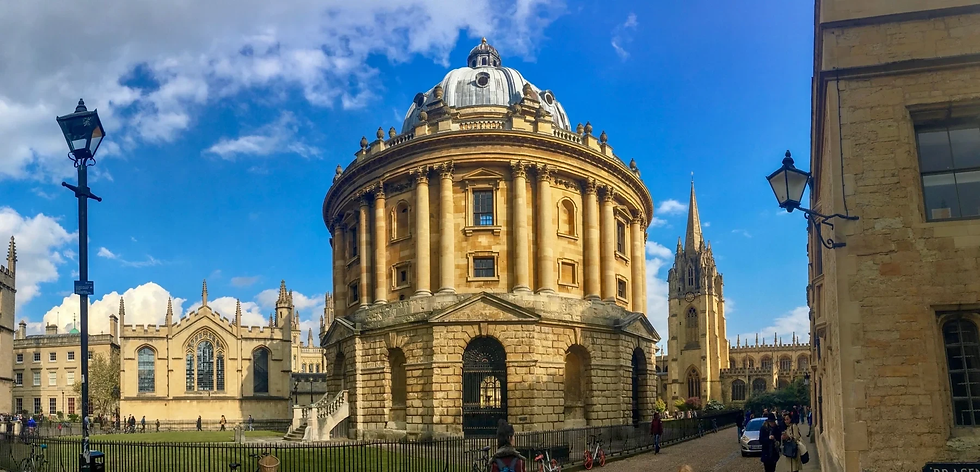
Silverstone is also easy to reach from the Cotswolds and its famous towns such as Shakespeare's Stratford-upon-Avon (40 miles away) and Stow-on-the-Wold (38 miles away) plus many others. The area has multiple, quaint and historic villages, plus a wealth of cultural attractions and I can recommend spending at least a few days in the area.

50 miles away is the Warner Brother's Studio Tour - The Making of Harry Potter, which I visited during the same weekend. You'll see from my guide, that I loved it.

Racing fans, if you liked this article then check out our guide to The Indianapolis Motor Speedway Museum. And for any car fans, if you liked this post, then check out our guides to Haynes Motor Museum or Morgan Cars Factory Tour, or the fabulous MAUTO Museum in Turin. More car related visitor guides coming soon.
Please note - I'm real
I visit every brand visitor centre and experience myself. My feedback is real, based on a single visit, but informed by years of experience designing and exploring brand experiences all over the world.
I love writing my own reflections, diving into a brand's history, doing the research and looking at spaces through the eyes of a commercial interior designer. With over 30 years of working with customers, I also enjoy watching how guests interact with guides, displays and spaces. Everything I share is honest, personal and entirely human, not AI generated.
That authenticity is important to me, and if it's important to you and you want to work with me, or share your experiences or want to suggest others, then I am happy to be contacted via this website.
Photographs: ©Julie White unless noted otherwise
Disclaimer - The views and opinions expressed are solely my own. I paid for the tours in full and any comments reflect my personal experiences on that day. Please visit and garner your own thoughts and feel free to research the brand and the visitor centre in question.


Mình thấy nhiều người bàn chuyện giao diện web dạo này hay làm màu quá, nên mình cũng hơi dè chừng. https://jun88nx.com/ mình bấm vào chỉ để xem bố cục thôi chứ chưa đọc kỹ nội dung. Lúc mở lên thì thấy trang sắp xếp khá thoáng, các khối nội dung tách ra rõ nên mắt đỡ phải quét liên tục. Mình vẫn kiểu cảnh giác vì mấy trang lạ đôi khi rối, nhưng ở đây nhìn vài giây là biết nên kéo xuống chỗ nào. Có một đoạn thông tin hiển thị dạng bảng theo cột, nhìn gọn và dễ liếc hơn kiểu dồn chữ. Menu cũng nằm ngay chỗ dễ nhìn nên đổi qua lại giữa mấy mục…
SC88 trông đỡ “rối não” hơn mấy trang mình từng lướt trước đây, kiểu mở ra là biết đang ở đâu luôn. Mình vào thử trên máy tính, thấy họ đặt cái tiêu đề dạng “Link Đăng Ký – Đăng Nhập” lên ngay phía trên nên ai cần đăng nhập chắc khỏi phải bấm qua bấm lại như chơi trò tìm kho báu, nhìn cái là thấy (đúng kiểu tiết kiệm thời gian cho người lười như mình). Phần giới thiệu tổng quan thì viết vừa đủ đọc, có nhắc chuyện vận hành mượt với hỗ trợ sẵn sàng, nên cảm giác trang này ít nhất cũng chịu đầu tư nội dung chứ không phải dựng tạm cho có, kéo…
https://sc88bn.com/ mình vừa mở nhanh trên điện thoại lúc rảnh vài phút để xem trang chạy ra sao. Load vào khá gọn, bấm qua lại vài mục mà không thấy giật hay đứng, kiểu phản hồi ổn nên dùng tay một tay vẫn tiện. Mình để ý phần bố cục làm theo dạng khối nhìn rõ ràng, đọc lướt là nắm được chỗ nào là thông tin tài khoản, chỗ nào là giao dịch (đỡ phải tìm vòng vòng như nhiều trang khác). Chữ với hình nhìn sáng vừa phải, không bị rối mắt, kéo xuống cũng không thấy nặng máy. Mình không ngồi lâu nên không bàn nội dung, chỉ thấy cách họ chia khu vực thông tin và…
SC88 lúc mới vào mình cũng hơi lăn tăn, sợ lại kiểu trang rối mắt như nhiều chỗ khác. Nhưng lướt một vòng thì thấy họ trình bày khá dễ chịu, chữ nghĩa không bị nhồi nhét quá, mấy khối nội dung tách ra rõ nên mình đọc kiểu lơ đãng vẫn bắt được ý chính. Phần giới thiệu thương hiệu đặt ngay chỗ dễ thấy, nói về hệ sinh thái đa dạng với việc họ hay nâng cấp trải nghiệm người dùng, đọc vài đoạn ngắn là hiểu họ đang muốn nhấn vào sự ổn định và tiện lợi chứ không vòng vo; mình cũng thích cách họ chia nhỏ nội dung thành từng đoạn gọn nên cuộn xuống…
Tối qua SC88 mình vào thử lúc đang nghỉ tay, ban đầu cũng nghĩ chắc lại thêm một trang cho vui thôi nên chỉ định xem vài phút rồi thoát. Ai dè giao diện nhìn khá dễ chịu, thông tin được chia thành từng khối tách bạch nên mình lướt một cái là nắm được đang ở phần nào, không phải kéo lên kéo xuống đoán ý họ sắp xếp ra sao. Mình vốn ngại đọc chữ dài, mà mấy chỗ dạng bảng cột trên đó nhìn gọn, liếc nhanh vẫn bắt được mấy dòng quan trọng. Menu đặt ngay chỗ dễ thấy nên chuyển mục qua lại cũng tiện. Nói chung mình vẫn hơi nghi ngờ lúc mới vào,…