


The Visitor Centre today is ... Haynes Motor Museum
Updated: Aug 11
Get revved up for a visit to truly one of the best car museums in the world, the fabulous Haynes Motor Museum.

I have visited many car collections, big and small, all over the world, but there is one stand-out example that I always recommend, the multi-award-winning Haynes Motor Museum in Somerset, England. Home to the UK’s largest collection of cars and motorbikes, plus a whole lot more, the museum has something for everyone, from casual visitors to car enthusiasts, history lovers and the engineers of the future.

Haynes is not necessarily a brand name everyone will have heard of. For those of us in the UK, of a certain vintage, it will immediately conjure up a memory. For those of you not from these shores, this will be a brand you'll enjoy learning about. And it all started with a book.
The Haynes manual was, for a generation of drivers, as much a part of the garage as the toolbox. Not a page-turner, but reliable in a crisis - which is more than could be said for some of the cars I drove back then. My first car was a second-hand, cherry-red Austin Metro with a puny engine. A second followed. Then, in what I can only describe as a lapse in judgement, a silver MG Metro in the early 1990s, sold to me by a boyfriend who quickly became an ex, who worked in the trade and really should have known better. It broke down more than the other two combined and was a total rust bucket. His Haynes manuals were stacked on a shelf in his workshop. Dog-eared and tea-stained, he obviously never referred to one when he did up the car he sold me.

After my Metros came nothing but Toyotas: sensible, reliable, and I have hardly needed a manual, let alone a repair, since. No supercar, supercharged pocket rocket, modified monster or classic MG has ever graced my driveway. For most of my driving life, I have been firmly in the practical lane. We do now have, what I affectionately call, the mid-life crisis mobile - a Toyota GR86, my husband's pride and joy. A proper rear-wheel drive sports coupe and the kind of car that puts a smile on your face without frightening you half to death. We love it.

Classic car owners and working mechanics still reach for Haynes manuals today, now mostly online, and over 200 million have been sold around the world.
The museum in Somerset that holds John Haynes's personal collection is, without question, one of the finest visitor experiences in the UK, yet often one of the most overlooked. I have a real soft spot for it, and for everything it stands for. Let me tell you why.
Haynes brand history

The Haynes brand has produced its iconic car manuals in the UK since 1966. The cutaway drawings and step-by-step photographic instructions within the covers became an essential piece of kit for all car owners, and I have owned and used many.
Founder John Haynes OBE (1938-2019) had a passion for all things motoring, evident in his impressive car collection, but also in his desire to make car maintenance less daunting, and from simple beginnings, his hugely successful Haynes Publishing Group emerged.
John was born in what is now Sri Lanka, the son of a tea plantation manager. He moved to England in 1951 to attend boarding school and showed an entrepreneurial streak from the start, starting his own business cleaning and maintaining his classmates' bikes. He earned enough money to buy a barn-find car, a wrecked Austin 7, which he converted into a lightweight sports car he called a '750' special, which he sold at a profit. He wrote a 48-page booklet explaining how he had done it and printed 250 copies. They sold out in ten days. He was still a teenager.
Building a '750' Special by John Haynes - Image of my own copy
After school, John joined the Royal Air Force for his National Service. It was while posted to Aden, in modern-day Yemen, that the next chapter unfolded. A colleague brought his lively Austin Healey Sprite convertible to John and asked for help rebuilding it. While it looked the part in its British Racing Green livery, under the bonnet, it had seen better days. John bought a duty-free camera and, in his spare time, photographed every step of the process, adding annotations alongside text typed by his wife Annette on the secondhand IBM typewriter he'd bought her as a wedding gift. The A4 sheets were printed by his brother David, collated by his parents Harold and Vi, who took them to a local printing company for binding in a wicker shopping basket. A true family affair. The result was a format that revolutionised car maintenance guides. Published in 1966, the first print run of 3,000 sold out in under three months. His legendary career in motoring manuals had well and truly begun.
The business expanded rapidly throughout the 1970s and moved into its headquarters in Sparkford, Somerset, England. In 1974, the Haynes Publishing Company was set up in Los Angeles, taking on established American competitors Clymer and Chilton, with printing and distribution based in Nashville. In 1979, the company floated on the stock exchange. By 1995, the company was selling around six million manuals a year, and John was awarded an OBE for Services to Publishing.

The publishing group later expanded their range to cover lifestyle topics, domestic appliances and the human body, but the vehicle manuals remained the backbone of the business. However, times were changing, and demand for printed manuals declined significantly in the last decade. Many of us turned to YouTube and online forums instead, and the cars themselves became harder to work on at home.
In 2020, Haynes Publishing Group was acquired by French firm Infopro Digital for £114.5 million, and the brand shifted its focus toward digital products, though print production of new manuals restarted in 2024, and the back catalogue has remained available throughout. The museum now runs as a separate entity.
Nothing gave John greater pleasure than stories of how his books connected, on a personal level, with the readers he was creating them for. He sadly passed away in February 2019, aged 80, after a short illness. But his legacy is one of making us feel, no matter how accomplished, that we are capable, resourceful, and resilient.
In the book John Haynes, The Man Behind the Manuals, Ned Temko writes that in John's downstairs bathroom, framed on the wall alongside his honorary degree from the Open University and his OBE, was a passage from Max Ehrmann's 1927 poem Desiderata: "With all its sham, drudgery and broken dreams, it is still a beautiful world. Be cheerful. Strive to be happy." It tells you everything you need to know about the man.
Visiting the Haynes Motor Museum: What to Expect
Haynes Motor Museum Design

John Haynes was determined that his car collection would outlast him. He and his family set up a charitable trust and donated every car to it, ensuring the collection would remain intact and accessible to the public long after he was gone.
The museum opened in July 1985 as the Sparkford Motor Museum, housed in a disused sawmill in Sparkford, Somerset, not the most glamorous of beginnings, but entirely in keeping with a man who had built his career on making the best of what was in front of him.

From the start, John insisted that every car in the collection should be drivable, not merely a static exhibit. His sons, who eventually took on major roles in the museum, had to remind him on more than one occasion that the cars belonged to the charitable trust and were not his to take out on a whim. He took the point, eventually.
He never stopped adding to the collection, scouring every auction catalogue and classic car magazine he could find, always on the lookout for something interesting - often eclectic, occasionally obscure, always chosen with purpose. He donated over 450 vehicles to the museum during his lifetime.

A new building opened in 2014 following a £5 million revamp and a decade of planning, with John's son Chris at the helm of the main contractor, Haynes Developments Holdings Ltd. During lockdown, the spaces were updated and reimagined, reopening to the public in May 2021. Items are increasingly being displayed in contextual settings rather than simply lined up in rows, and the result is a museum that feels curated rather than accumulated. It exudes the passion of the man behind it. The museum welcomed 100,000 visitors in 2025. It is quite a legacy.

Haynes Motor Museum - Foyer
Before you even start the tour, you're greeted by some horsepower. There's a changing display of cars here and when we visited we saw Formula 1 cars from Williams Racing.

John Haynes OBE – The Man, the Manuals and the Museum
When most of us were making banana bread or doing daily workouts with Joe Wicks on TV, the museum used the pandemic closures to add more content to the exhibits. First up is a gallery telling the history of John himself, his ever-supportive wife Annette and his passion for his family and all things motoring.
It must have been hard to condense such a fascinating life down into a few exhibition panels, but the visitor really does get a sense of the man behind the brand.
One particular artefact I enjoyed seeing was his well-travelled briefcase, given to him by his father for his 21st birthday. He used it throughout his National Service in the RAF and continued to use it his entire life. Battered by years of service, John never saw the need to replace it.

And yes, that green 1931 Austin 750 Special isn't just any car; it's the personal vehicle that sparked the entire Haynes Manuals empire.

You even get to see the original hand-cranked Gestetner mimeograph duplicating machine John used to create his manuals when he was serving abroad. Not often recognised, but John was also an artist and designed the Haynes logo himself, using his favourite colours, red and yellow.

The iconic pen and ink drawings that featured in the manuals from the 1970s to 1990s were mostly drawn by Terry Davey, who had worked as a signwriter for the British grocery brand Tesco. Truly works of art, the drawings have been reproduced across the walls of the exhibition space. There's an article on Davey available on Car and Classic that's well worth a read.

If proof were ever needed of the manuals' worldwide popularity, consider this: in 1976, the Porsche 911 manual became the first Haynes title to outsell the number of cars produced worldwide for that era of the model. More people wanted to know about the 911 than could afford to own one. Which, when you think about it, is not entirely surprising.

There is one more family story worth telling in this gallery. John loved racing, at Brands Hatch in a Lotus, or at Silverstone in an MGA. But it was his 1959 Elva Courier Mark II that he always called his favourite. He reluctantly sold it before heading out to Aden on RAF assignment. Decades later, in the 1980s, family and colleagues tracked down that very same car, bought it, had it restored, and presented it to the 'Boss' as a Christmas gift. The gorgeous gold Elva Courier now sits proudly in the museum. It's worth looking out for.

Haynes Motor Museum - The Red Room
This room has to be seen to be believed and my photographs won't do it justice.
A stunning selection of over 50 red sports cars, of all vintages, greet you in this hall. Here you get to discover why red is such a popular colour in motoring, what it symbolises around the world and why it is so emotive. John Haynes wanted you to appreciate the lines and styling of the cars, without a clash of colours interfering with your view. Mission accomplished!

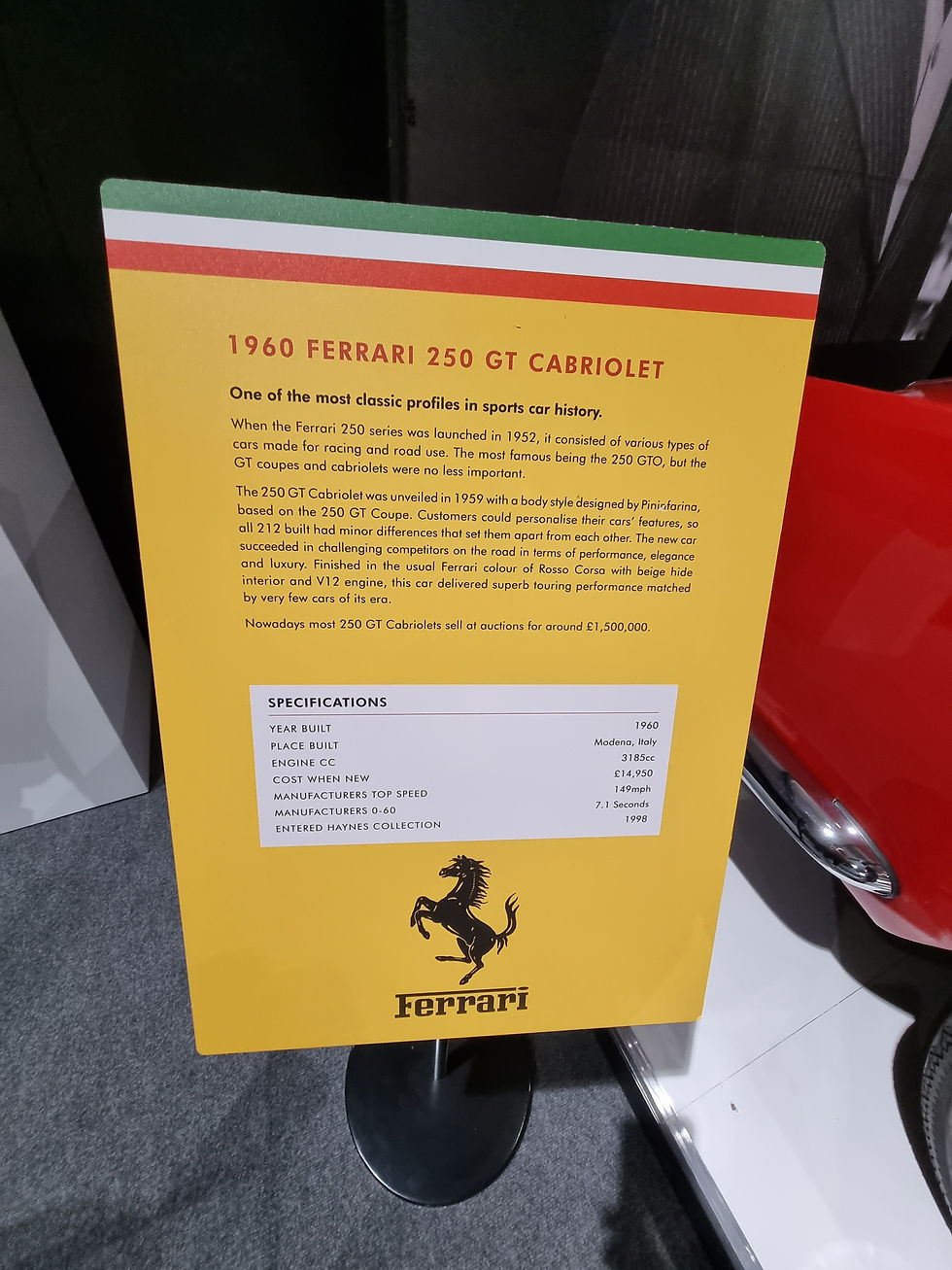
If you ever had posters on your wall of the likes of a Lamborghini Countach, AC Cobra or Ferrari 250 GT Cabriolet, then this is the gallery for you.

There is everything in here from Italian sports cars, British classics, and muscle cars like the 1973 Pontiac Firebird Trans Am to a pretty 1968 Triumph Spitfire Mark III.

Since my visit, the museum has announced that the Red Room is to be reimagined as an interactive engineering and STEM gallery, following a £180,000 National Lottery Heritage Fund award. The transformation is a two-year project, so the room I visited may look quite different by the time you arrive, though knowing this museum, it will be worth seeing whatever form it takes. I can't wait to see the transformation.

Haynes Motor Museum exhibition - Triumph: How Do You Break a Land Speed Record on Two Wheels?
What do you get when you take two Triumph Rocket III engines, one machine, and put TT racer and TV presenter Guy Martin in the saddle? On August 9, 2016, Guy Martin piloted the streamliner to 274.2 mph at the Bonneville Salt Flats in Utah, making it the fastest Triumph in history.

Ok, so adverse course conditions like soft salt on the 11-mile course prevented the team from beating Rocky Robinson's 2010 376.36 mph record, but we won't hold that against him. The exhibition sets the record attempt in context, comparing the Streamliner's speed with other vehicles and animals, which is the sort of detail that works equally well for a ten-year-old or a seasoned engineer. I have since visited the Triumph factory tour and museum, and a full guide is coming soon. But if you want a taster of what makes this brand tick, this exhibition is a good place to start.
Haynes Motor Museum - Williams F1 The Drivers and the Driven exhibition
This exclusive exhibition focuses on the Williams F1 team and was superb and has since been refreshed. Williams is the joint second most successful team in Formula One history. There were cars on show that had been driven by the likes of Nigel Mansell and Valtteri Bottas, plus a film from Williams Cinema showcasing factory line to finish line, including plenty of Formula 1 facts.

The fun elements now include things like lift-up flaps with questions and answers to test your knowledge, an interactive Silverstone racetrack, allowing you to race against friends and family, plus a section on pitstops through time.


You can even learn more about those classic rivalries, such as Prost vs. Senna and Hill vs. Schumacher.


Enzo Ferrari – The Man and the Machine
If you love Ferrari, then you'll enjoy this exhibit where you learn about Enzo's story in his own words and on film. Find out about the prancing horse and how the name Ferrari ‘Dino’ originated.


Haynes Motor Museum - The Dawn of Motoring & Veteran and Vintage
Your journey starts with some of the oldest vehicles in the collection, from notable names, such as Benz, Daimler, Oldsmobile, Rolls Royce and Renault.
There are some great displays here, with interactive video screens, exploring the history of the car brands.

A fascinating exhibit showcased how behind every successful man, is a tough and intelligent woman. In this case it was Bertha Benz, and the displays and videos showed how she made the first long car journey, a 104 km drive, which was reported in the newspapers and created a demand for her husband Karl's brand.

There are working models and information panels, and several buttons to press and levers to turn for the little ones.

If, like me, you love a good typeface or font, a dial, switch or a petrol can, then there are plenty of terrific examples in here.


Haynes Motor Museum - Memory Lane gallery
Feeling nostalgic? The Memory Lane hall holds many fine examples of everyday British motor cars from the 1940s to the 1970s, cars that, depending on your own vintage, you or your parents or grandparents might have owned.


A particular favourite was the adorable, green 1958 Standard Ten Saloon produced by the British Standard Motor Company.


There was even an example of my grandfather's Triumph on show. Now that brings back memories of going for ice cream in the summer as a child and the leather seats burning our legs.

And the star of the show for me was this classic RAC breakdown van. I want one!

What was particularly good was to see a recreation of a historic vehicle repair shop, which you could walk around, looking at all the motoring components and paraphernalia. This would be a terrific resource for reminiscence therapy for those with dementia, something very close to my heart personally and something that many museums don't investigate deeply enough.

Haynes Motor Museum - Hall of Motorsport
Opened in 1997 by the legendary British Formula One driver, Sir Stirling Moss OBE, there's a hall full of all types of racing cars.

Whether it's a 1987 Ford Sierra Cosworth RS500, a 1947 Allard K1, or a 2002 Ferrari F360 GT Modena Challenge Stradale, the gallery takes you through decades of competition, from Grand Prix racing and rallying to, unexpectedly, royal karting. The vehicles speak for themselves.

Haynes Motor Museum - The American Dream gallery
Want to see over 100 years of Stateside motoring history? There's a huge hall of American cars waiting for you, packed with Packards, Fords, Chevvies and more, with audio-visual displays, timelines and information on all the major companies.

Finding the 1931 Duesenberg Model J, with its massive 6.9-litre engine, proved exceptionally difficult, requiring decades of searching by John. He fell in love with Duesenbergs as a young boy and spent a significant portion of his life tracking one down, finally acquiring this prize piece in 1993.

Valued at over £8 million, the blue Duesenberg is regarded as one of the rarest and most valuable cars on earth. John Haynes himself famously described it as "perhaps the best car in the world, ever."
My husband will tell you that I have no desire for a sports car, but would buy a 'woodie' if I won the lottery. I could certainly cruise around Perthshire in this spectacular 1937 Ford V8 Model 78 Deluxe "Woodie" Station Wagon.

The Ford V8 engine made this vehicle a choice target for American Depression-era gangsters. The museum highlights that notorious criminal John Dillinger even wrote a letter to Henry Ford thanking him for building such a fast, perfect getaway car!

Haynes Motor Museum - Wheels Around the World
The "Wheels Around the World" exhibition at the Haynes Motor Museum explores how global geography, politics, and social demands shaped automotive design from the interwar period to the early 2000s. Featuring eclectic vehicles like the 1975 Bricklin SV-1 and the 1959 GAZ M13 Chaika, the gallery highlights international engineering adaptations and cultural evolution.

Minis, muscle cars, micro cars, movie cars and motorcycles. It's all here.

The 1981 DeLorean DMC-12 is as striking as ever. This particular model is an immaculate, low-mileage time capsule that perfectly showcases John DeLorean’s radical vision of brushed stainless steel and gull-wing doors. While the display details the car's notorious real-world commercial failure in Belfast, it equally celebrates how Back to the Future permanently transformed an automotive flop into a global pop-culture icon.

And, if the nostalgia hit of the DeLorean wasn't enough, then I am old enough to remember reruns of the iconic television show M*A*S*H (1972–1983), which cemented the Willys MB / Ford GPW "Jeep" as an immortal symbol of military utility. The exhibit highlights how this single military vehicle reshaped consumer transportation, serving as the direct blueprint and inspiration for Maurice Wilks when he designed the original British Land Rover.


And who can forget the 1985 Sinclair C5? It might have been a flop, but its design prophesied the modern electric bike and e-scooter revolution by pioneering lightweight, license-free urban micro-mobility decades ahead of its time.

Haynes Motor Museum - British & World Motorcycles
There's even a large gallery for those that prefer two wheels, not four.

From penny farthings to trail bikes, the gallery is funded in part by the British Motorcycle Charitable Trust.

Haynes Motor Museum - British Icons: Driven by Innovation
The British Icons gallery is a newly redesigned exhibition covering more than 40 years of UK automotive history, and I bet it is one of the most enjoyable spaces in the museum. What sets it apart is the focus: rather than simply displaying engineering marvels behind a rope, it tells the human stories of the designers, builders and racers who shaped society through what they created.

Opened in 2025, four legendary British marques take centre stage: Aston Martin, Jaguar, Lotus and Mini, with headline vehicles that rotate, so there is always a reason to come back. There are also interactive zones, including one where you can digitally design your own Mini livery. I can't wait to go back and try that.
Haynes Motor Museum - Transitions.
Opened in October 2025, a new exhibition called Transitions explores sustainable motoring and the future of the car, electric vehicles, hydrogen, and emerging technologies.

Haynes Motor Museum - Top Trumps and brass rubbing
Younger visitors are given plenty to entertain them. There are brass rubbing stands and a Top Trump trail, the Haynes Motorland outdoor playground with coin-operated go-karts, an interactive garage and a scaled-down road system. There's even an on-site karting circuit (bookable separately) which is fun for all ages.
The museum also runs events for children throughout the year, such as Easter egg hunts, so they really will be kept busy.

Food and shopping at Haynes Motor Museum
There's a large café and a well-stocked shop for those car-related gifts. They also have a coffee van outside.
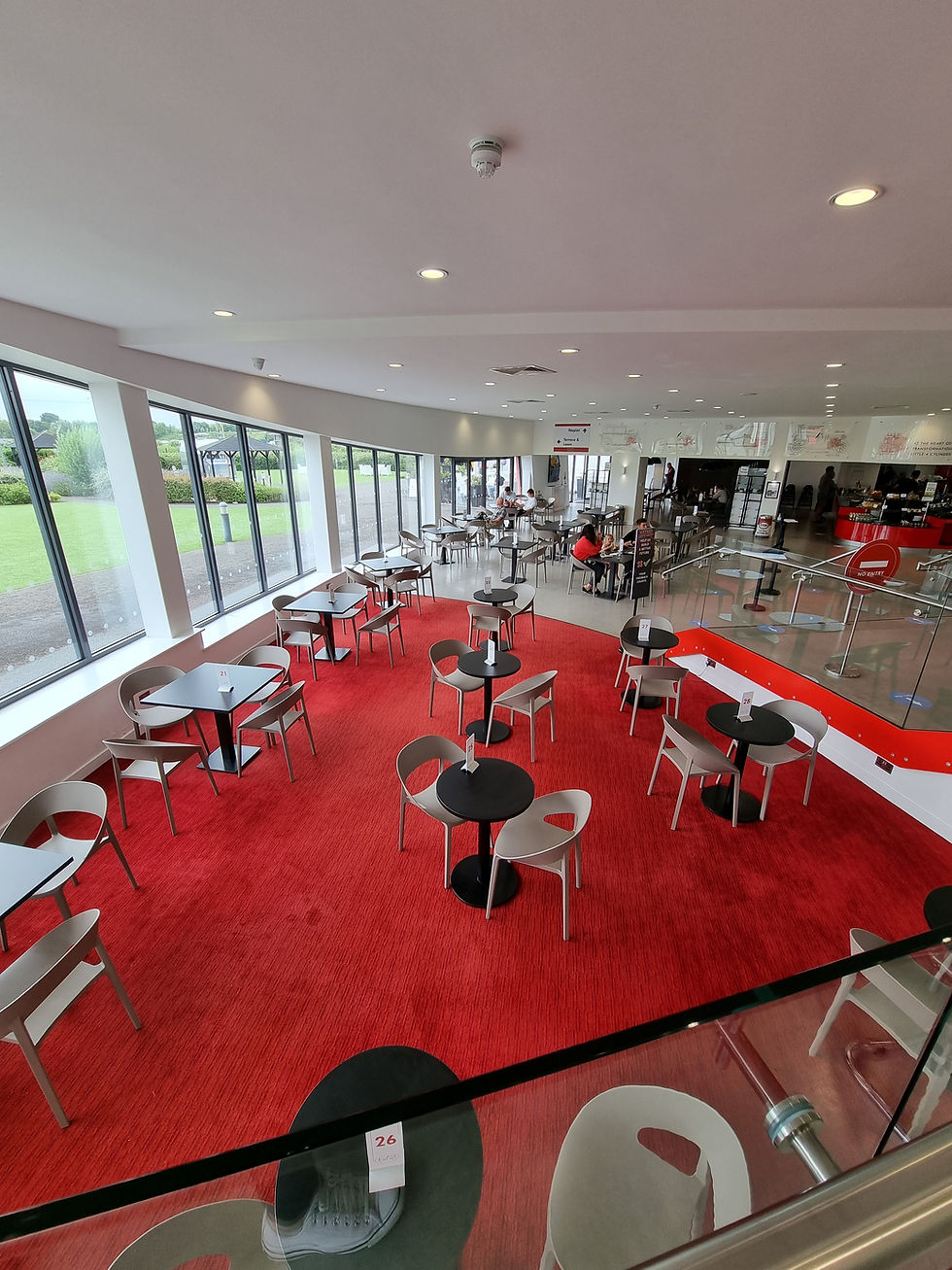
Café 750, a nod to the original manual John Haynes created, is the perfect place for a coffee and cake pitstop.

The shop is well stocked with branded items, models, souvenirs, and gifts for every kind of motoring enthusiast. Worth a browse on the way out, and dangerous if you are easily tempted.

And, should you need a manual, there's plenty on offer.


I picked up my second-hand copy of Ned Temko's book before my visit, but it's a great read and comes with your own copy of the first manual.

Since 2021, they have an area outside called The Paddock, where car clubs can meet, which is also the site of their monthly Breakfast Club for themed car events. If I lived closer I'd be attending them for sure.
Is a trip to the Haynes Motor Museum worth it?
The Haynes Motor Museum is worth every minute you give it, and I gave it six hours, including a coffee and a slice of something in Cafe 750. You could spend less time and still come away satisfied, but the sheer number of vehicles on show rewards patience, and there is always something you nearly missed.
It is informative without being exhausting, which is harder to achieve than it sounds. The space is bright and open, with wide aisles, and the noise levels for all audiovisuals were just right. It could do with a little more seating around the museum exhibits, and if there had been a bit more braille on show or some models visitors with sight loss could have felt, then that would have made it pretty much perfect. Visitors who require a carer can claim a free carer's day ticket, and mobility scooters can be pre-booked.
A note for families: there is plenty here for younger children, though many will find it hard not to touch the vehicles on show. My advice is to visit with the children first, and then return without them, perhaps for one of the museum's themed events, so you can take your time. The brass rubbings kept young and old busy alike, and the playground was a welcome break.
This is a museum which is always looking to refresh the exhibits, so there's more to discover on a return trip including new galleries and interactive elements. And what of the engagement and advocacy? I recommend it highly. But there's more than that. Before I visited, I knew of and had used the manuals, and that was my only connection to the brand. After my visit, I really felt a deeper connection. This was a family business run by a family man. The first gallery, based on John's story, was engaging and authentic, and instilled a real sense of a life well lived, by a man who cared for his business and his family. The cars you see after, became even more special, because we, the visitor, had been given the context first. This is not just a collection of cars, but John's pride and joy. That's why, after visiting, I tell people that his contribution to motoring is as important as the likes of Ferrari and Ford. John's passion to educate gave us manuals that demystified car maintenance for the masses. His legacy should not be overlooked, and neither should his museum.
Make the trip. It's worth it.
Plan your trip to the Haynes Motor Museum
Address
Haynes Motor Museum, Sparkford, Somerset, BA22 7LH
Website: Haynes Motor Museum
How much are tickets?
Always check with the venue for up-to-date prices.
Adult (16+) | £22.45 | £24.95 |
Concession (65+, student, armed forces, Blue Light) | £18.90 | £21.00 |
Child (4–15) | £12.75 | £14.20 |
Under 4s | Free | Free |
Carer | Free | Free |
Worth knowing: your ticket is valid for a full year, so you can come back as many times as you like. At that price, it's hard to argue with.
I paid full price, and this was not part of any paid advertising.
Opening times
It's always worth checking with the Haynes Motor Museum for their current opening times, as they can vary.
I visited in the summer so the museum was open daily from 10:00 - 17:30.
Getting to the Haynes Motor Museum
We were on a 3-week road trip around the UK, travelling from Scotland through Herefordshire, Gloucestershire and finally staying a week in Somerset.
Haynes was 45 minutes by car from our accommodation. It's an hour in the car if you're staying in Bath and 1 hour 15 minutes if you're based in Bristol.
Where we stayed for our visit to the Haynes Motor Museum
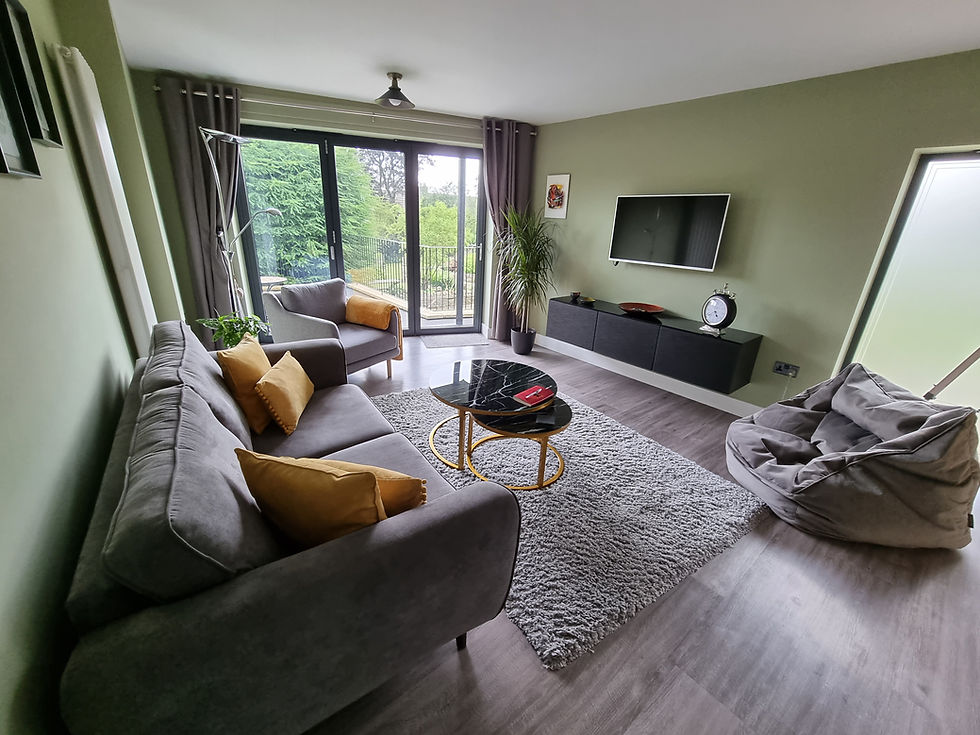
Rarely can we recommend a place to stay so easily. We were in the area for a week, so chose an Airbnb with parking, in the small, pretty town of Timsbury, hosted by Teresa called The Cobblers.
The place was perfect for 2, had everything and more we could want and was spotless. Teresa told us that they had only recently accepted bookings and that she and her husband has stayed for a few weeks in the apartment, just to figure out what guests might need. We have never stayed somewhere quite so well equipped. They had literally thought of everything. It's super quiet and looks over their lovely garden, but you never feel overlooked.
Parking is tight but manageable, even if you've arrived in your SUV like us, and the streets around the apartment are equally narrow, so be prepared to be patient and let people pass.
There's a terrific chip shop round the corner too, that is extremely popular, so be prepared to wait.
If you decide to stay, then say hello to Teresa from us. We've not been paid to advertise her place, but we would stay there again without hesitation.
What else is there to see and do close to the Haynes Motor Museum?
Haynes Museum is 35 minutes from the famous Glastonbury, home of the world-famous music festival. The town itself is well worth a visit, as it has plenty of independent shops and a fun vibe.
Haynes Museum is also 30 minutes from the pretty Cathedral city of Wells, with it's stunning cathedral and Bishop's Palace.
Frome is also around 30 minutes away with lots of independent shops.
Cheddar Gorge and the Mendip hills are just under an hour away too.
Further reading
Car fans, if you liked this article then check out our guide to The Indianapolis Motor Speedway Museum, Morgan Cars Factory Tour, Silverstone Museum or the fabulous MAUTO Museum in Turin. More car related visitor guides coming soon.
Please note - I'm real
I visit every brand visitor centre and experience myself. My feedback is real, based on a single visit, but informed by years of experience designing and exploring brand experiences all over the world.
I love writing my own reflections, diving into a brand's history, doing the research and looking at spaces through the eyes of a commercial interior designer. With over 30 years of working with customers, I also enjoy watching how guests interact with guides, displays and spaces. Everything I share is honest, personal and entirely human, not AI generated.
That authenticity is important to me, and if it's important to you and you want to work with me, or share your experiences or want to suggest others, then I am happy to be contacted via this website.
Photographs: ©Julie White unless noted otherwise
Disclaimer - The views and opinions expressed are solely my own. I paid for the tours in full, unless mentioned specifically, and any comments reflect my personal experiences on that day. Please visit so you can foster your own opinion and feel free to research the brand and the visitor centre in question for yourself.


Comments